West Point, Preminghana, Robbins Island, Peggs Beach February 7 - 9
 
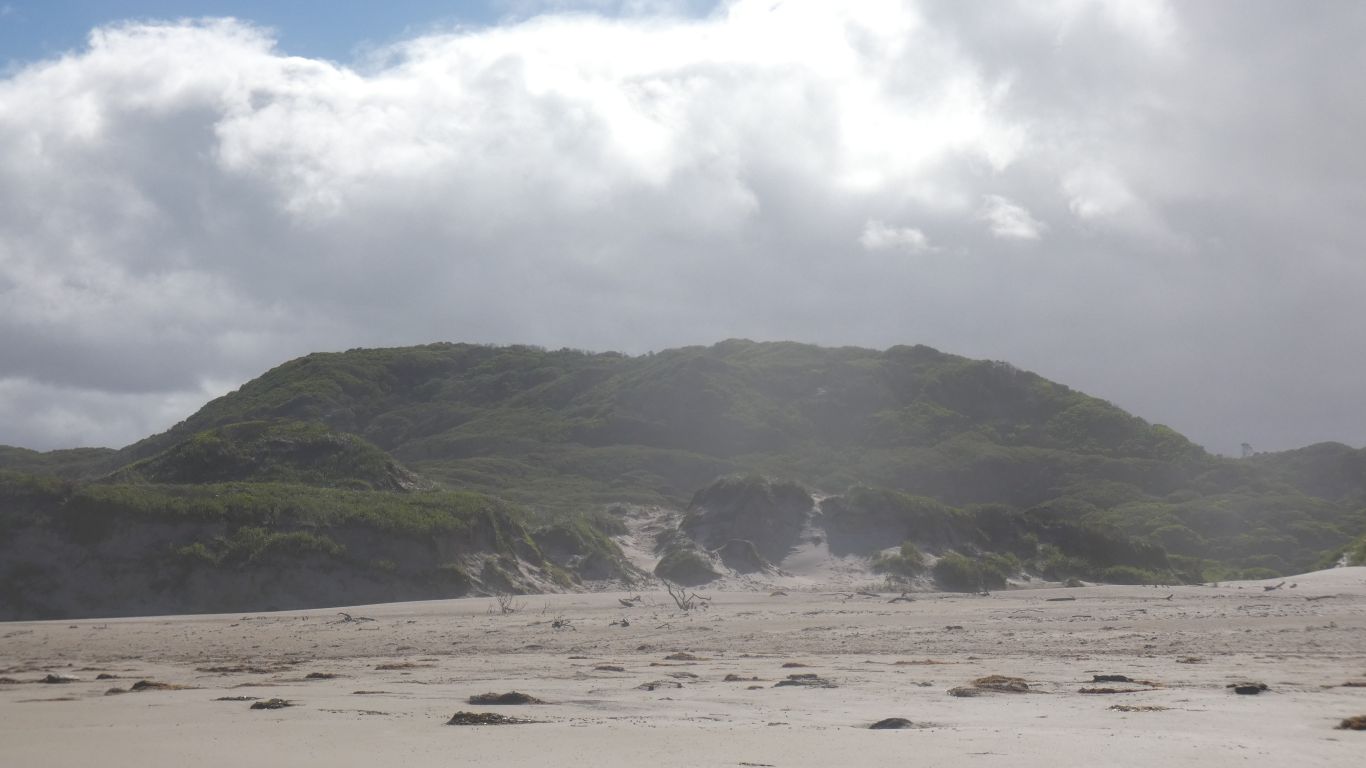
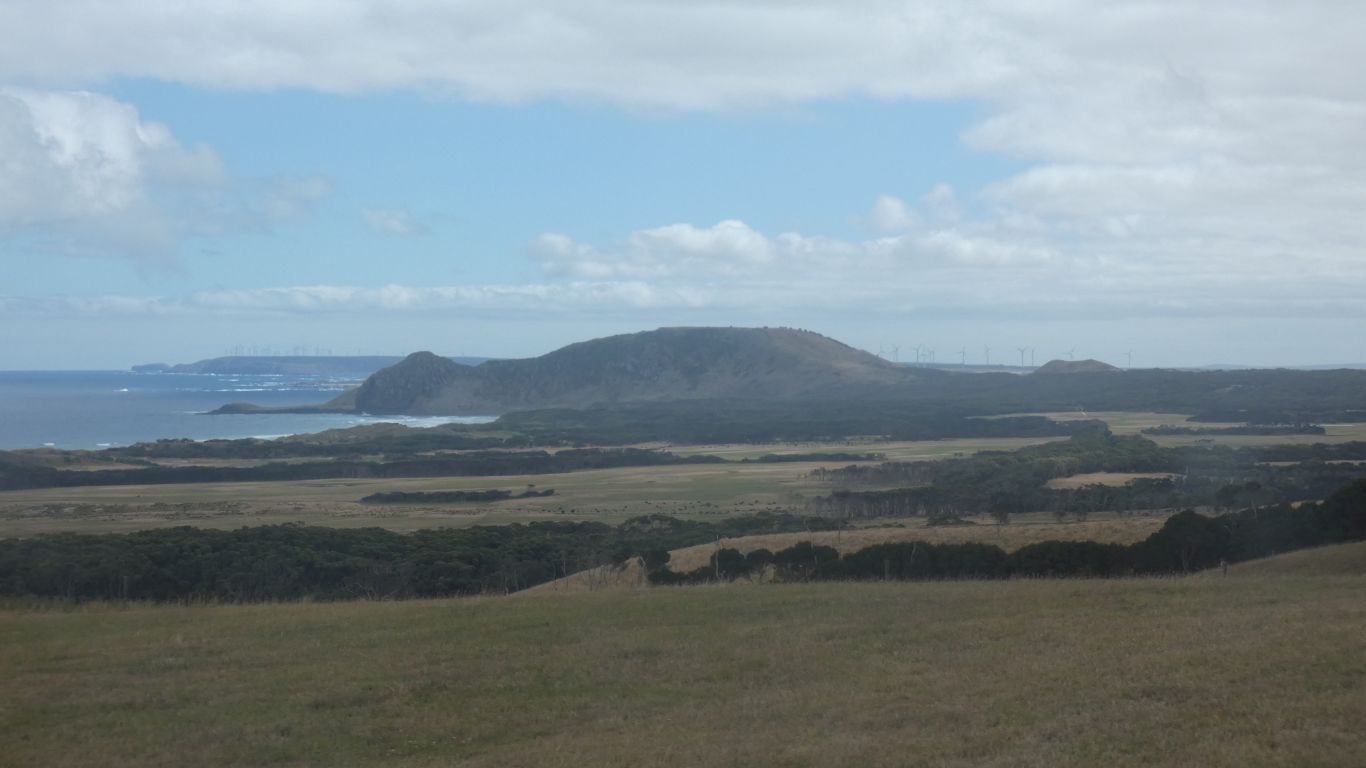
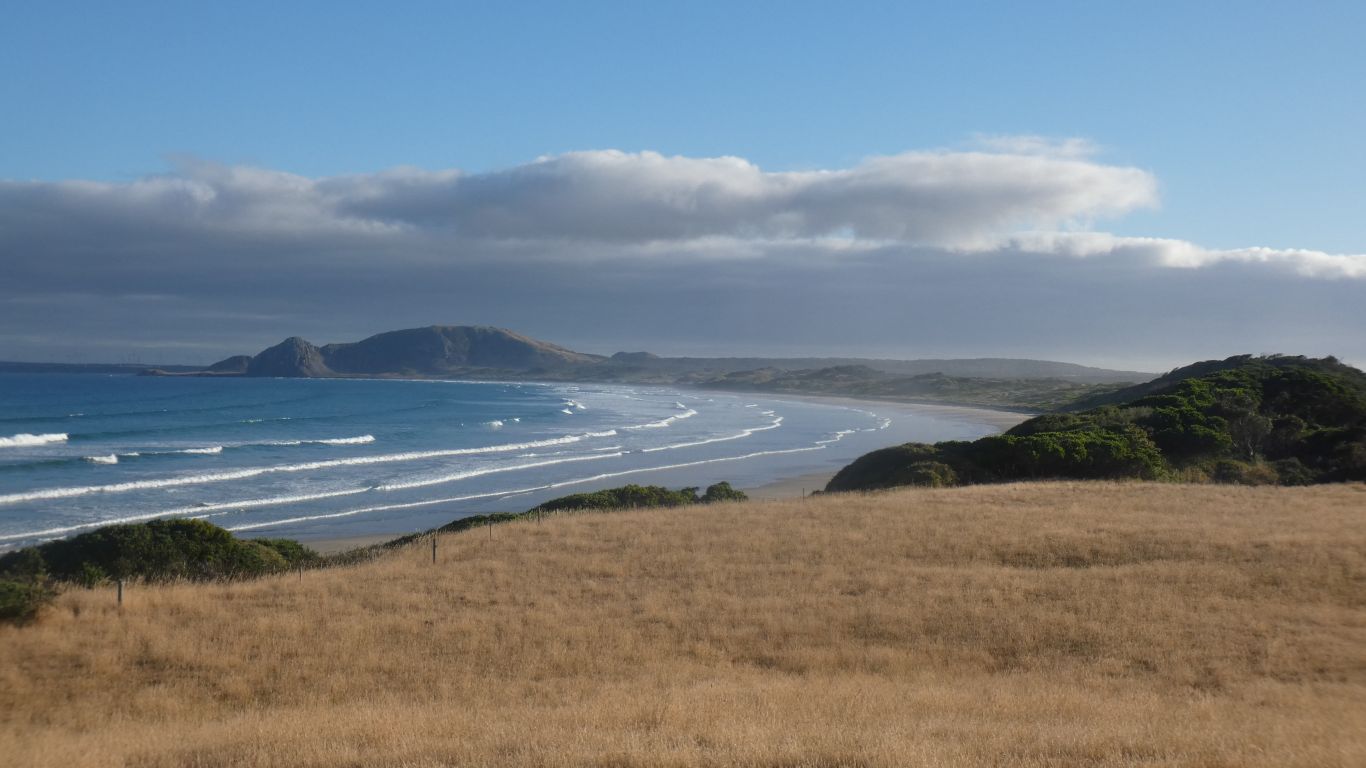
  Up early for a long day. A last look at Mt Cameron West.

There isn't a Mt Cameron East, just a Mt Cameron, near the east coast of Tassie.
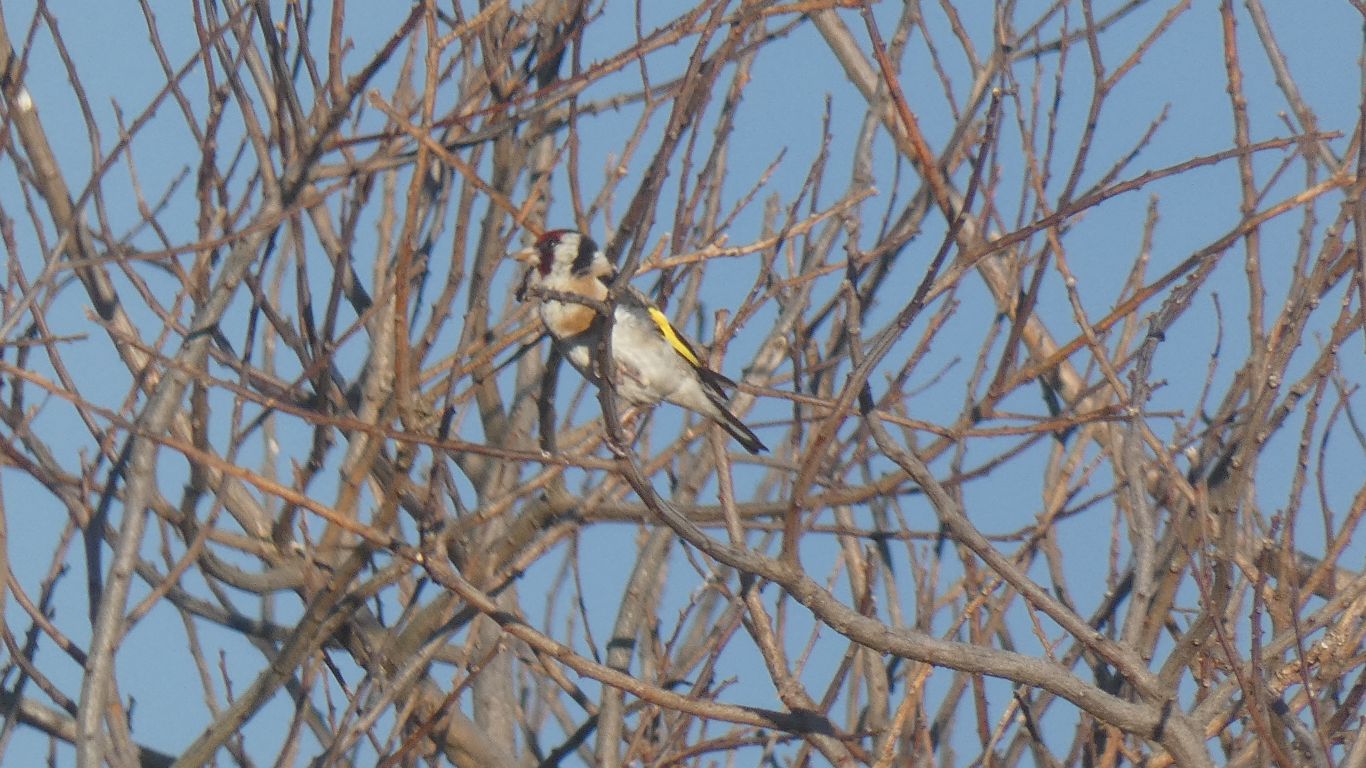
     
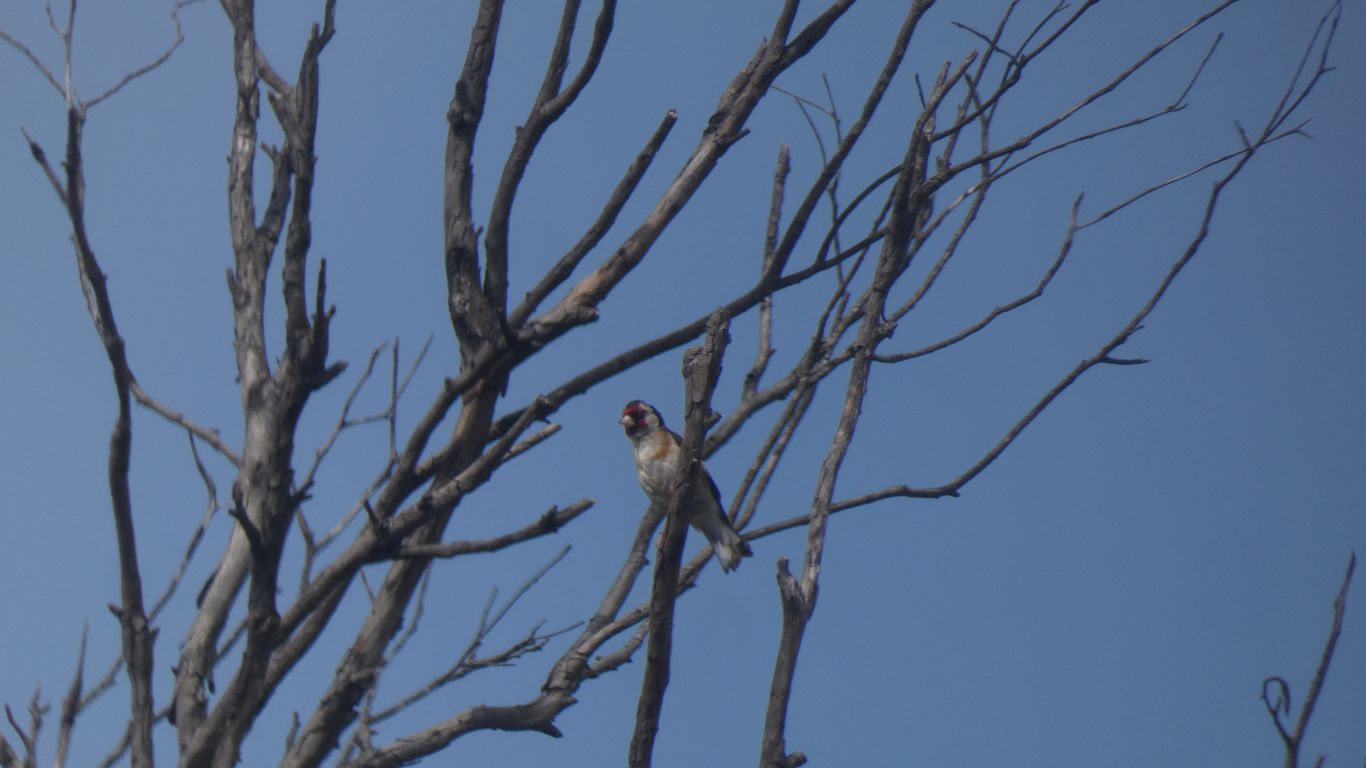
  A European Goldfinch.

I guess introduced, like the starlings.

There are several different birds in the bushes next to the truck. This is the best I could do. Just a fleeting  glimpse.
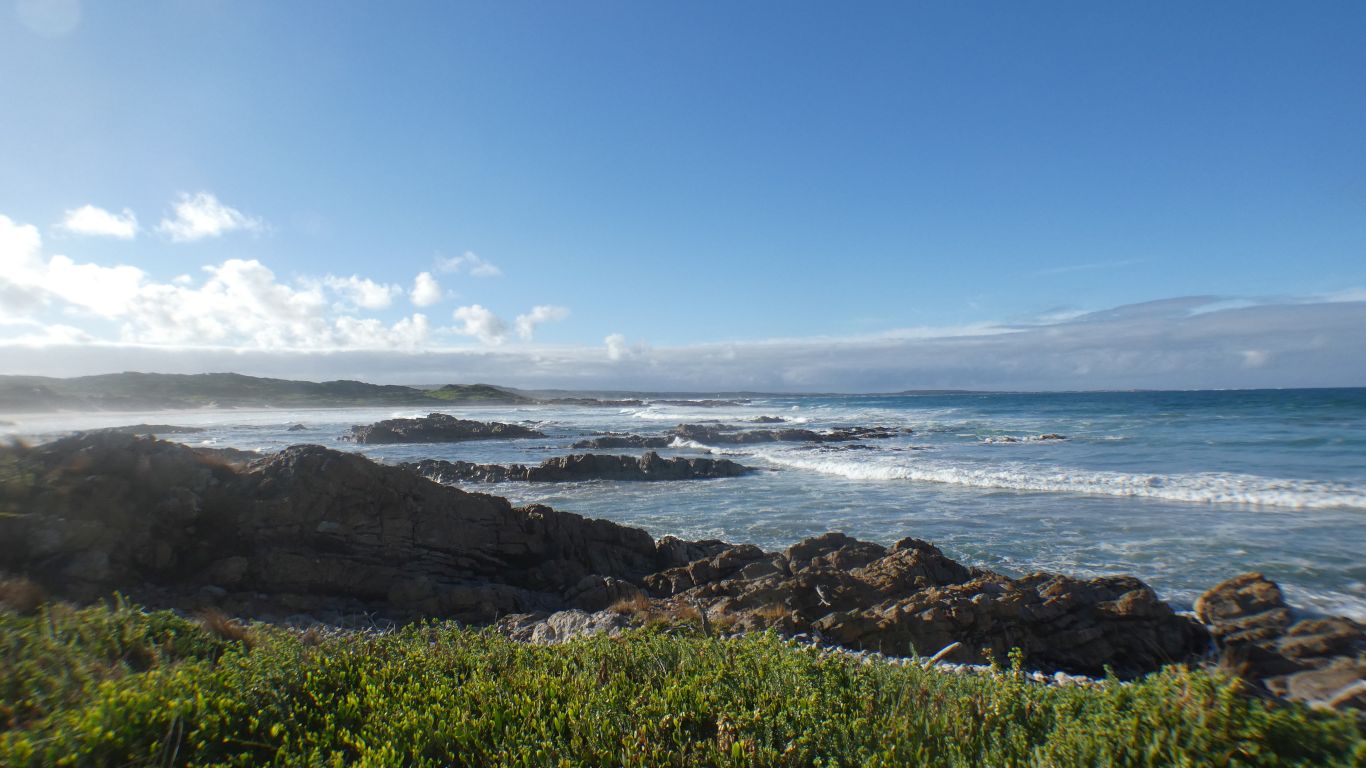
     
  Armed with new evidence - a lot of internet searches and a "I remember ..." - we revisit West Point.

It really is West. The most westerly point of Tasmania. Not the US military officer training establishment with grand visions of protecting "the west" slowly becoming consumed by the mists of time and presidential behaviour.
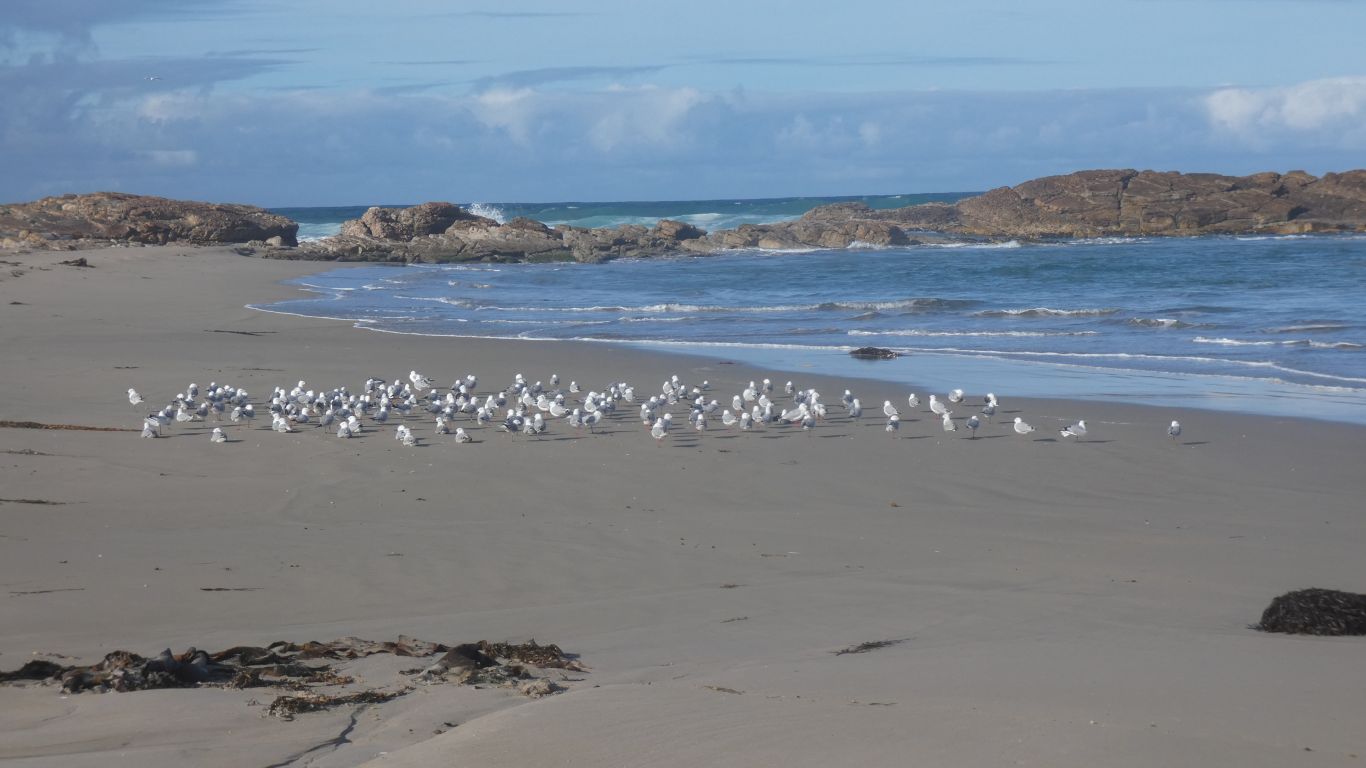
     
  Why here?

And why do some birds stand for long periods on one leg?

Answers in a self addressed email please .....
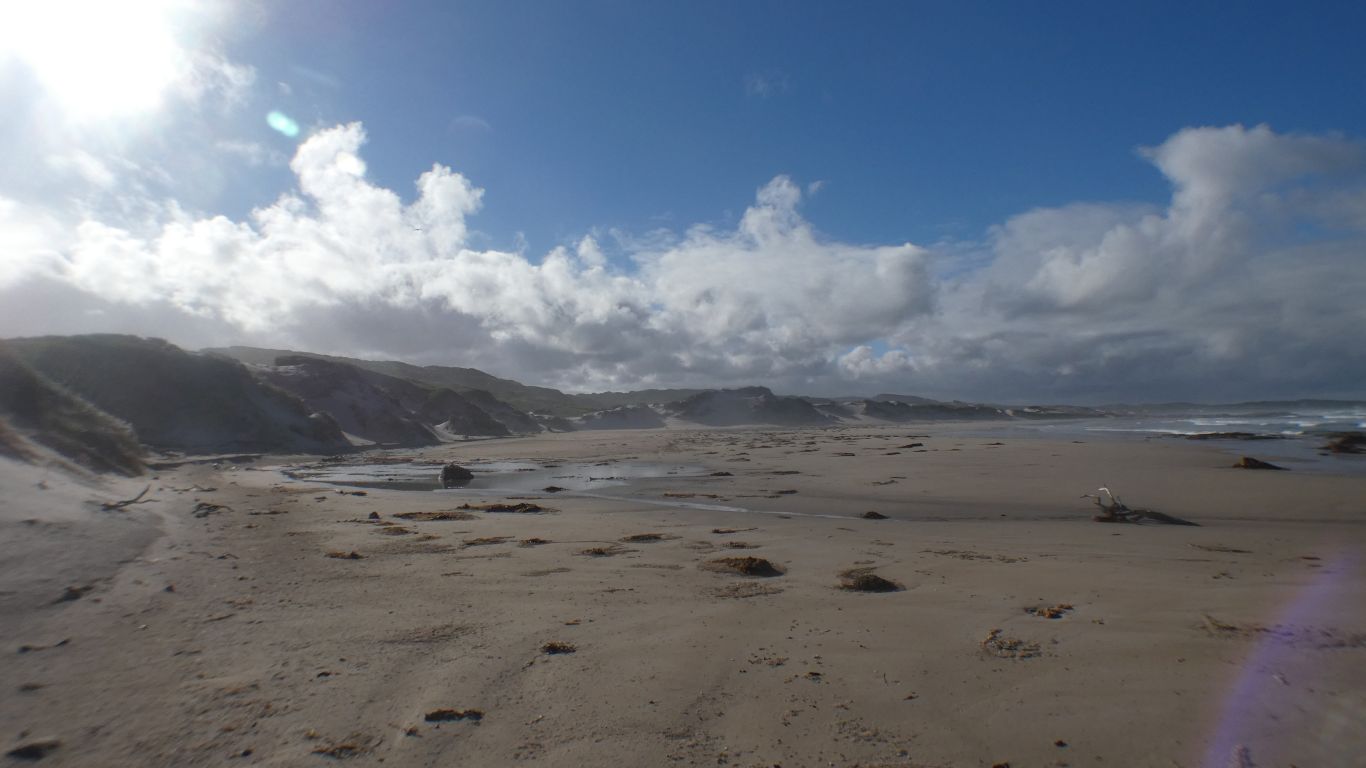
     
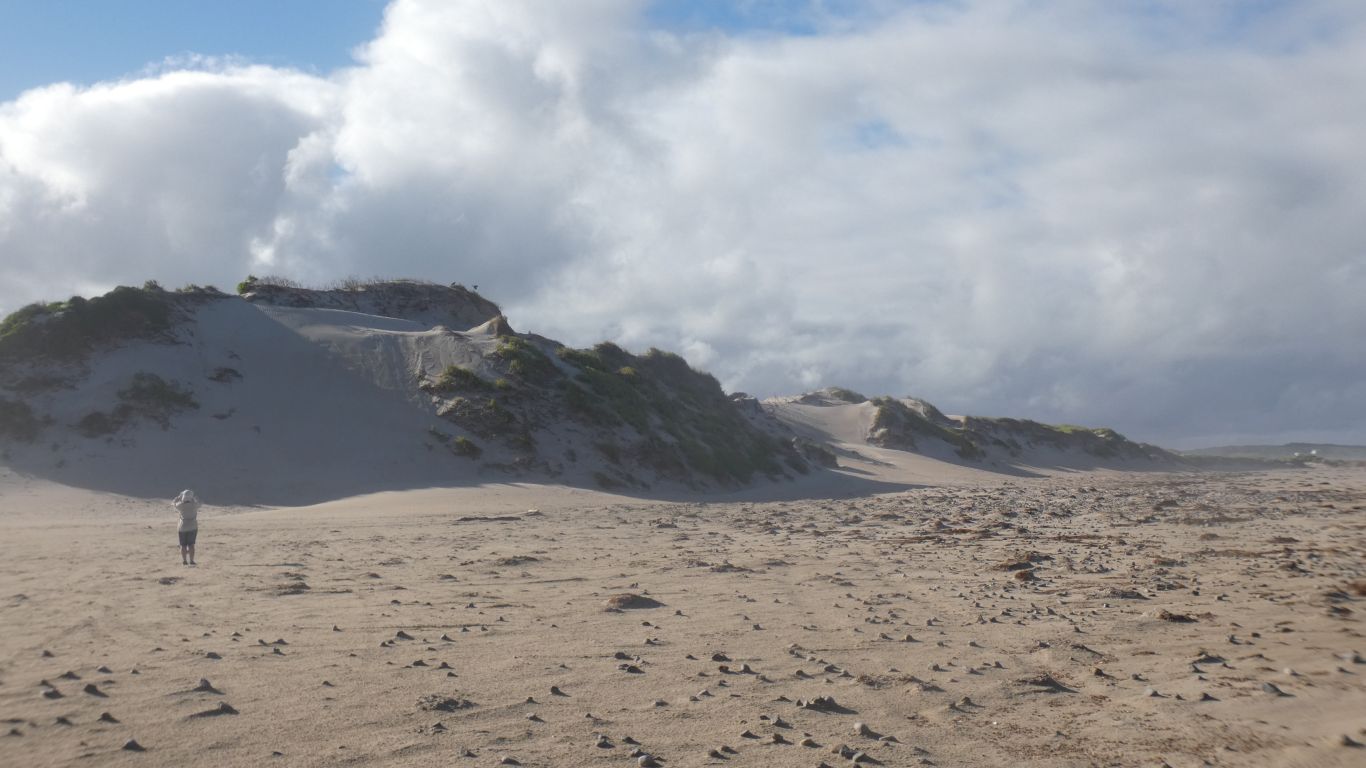
  We believe that somewhere in the dunes is a midden. 100x40x2.75m. Which by my estimate is big.

Hard to miss one may imagine. But we managed to not find it.

Either we are looking in the wrong place, or our powers of observation are sadly depleted.
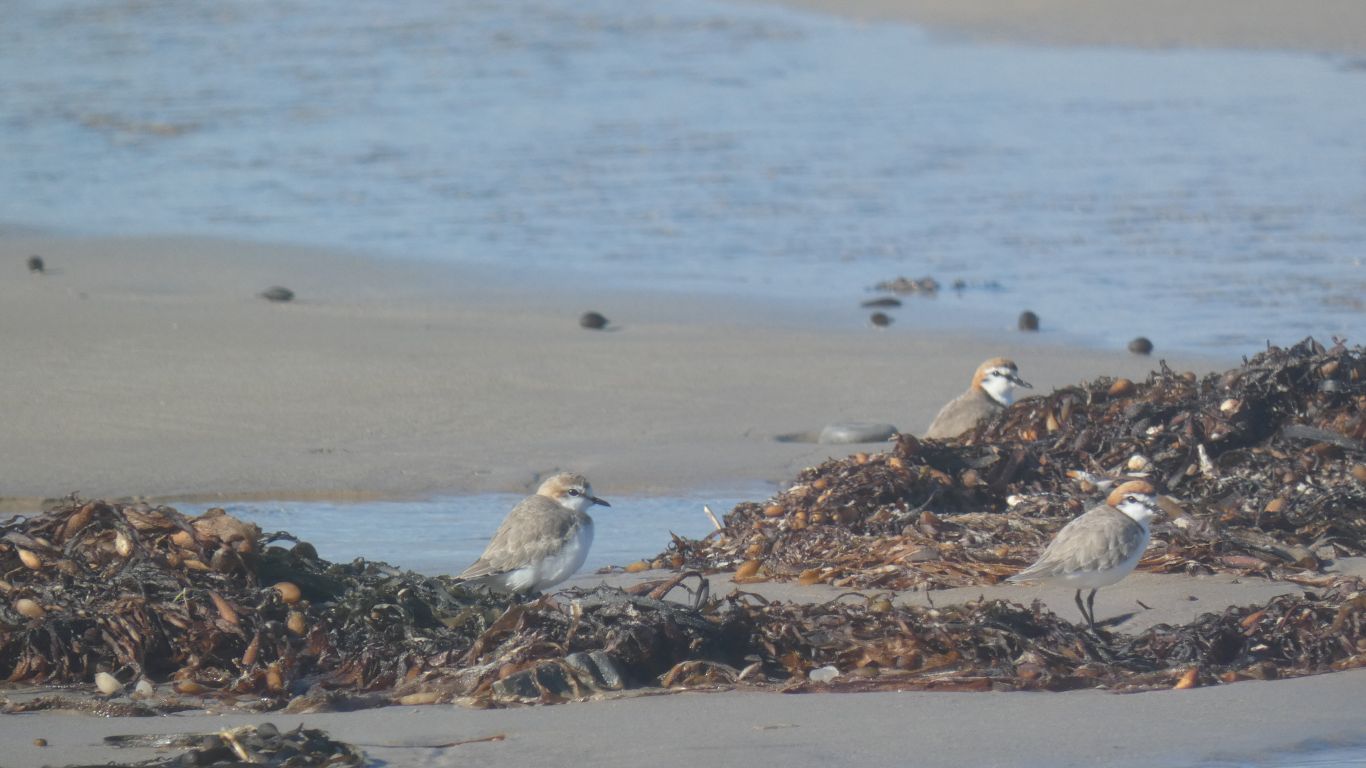
     
  We hide a little of our disappointment by allowing ourselves to be diverted by red capped plovers. As endangered as the hooded plovers.
     
  Then back to the dunes.
     
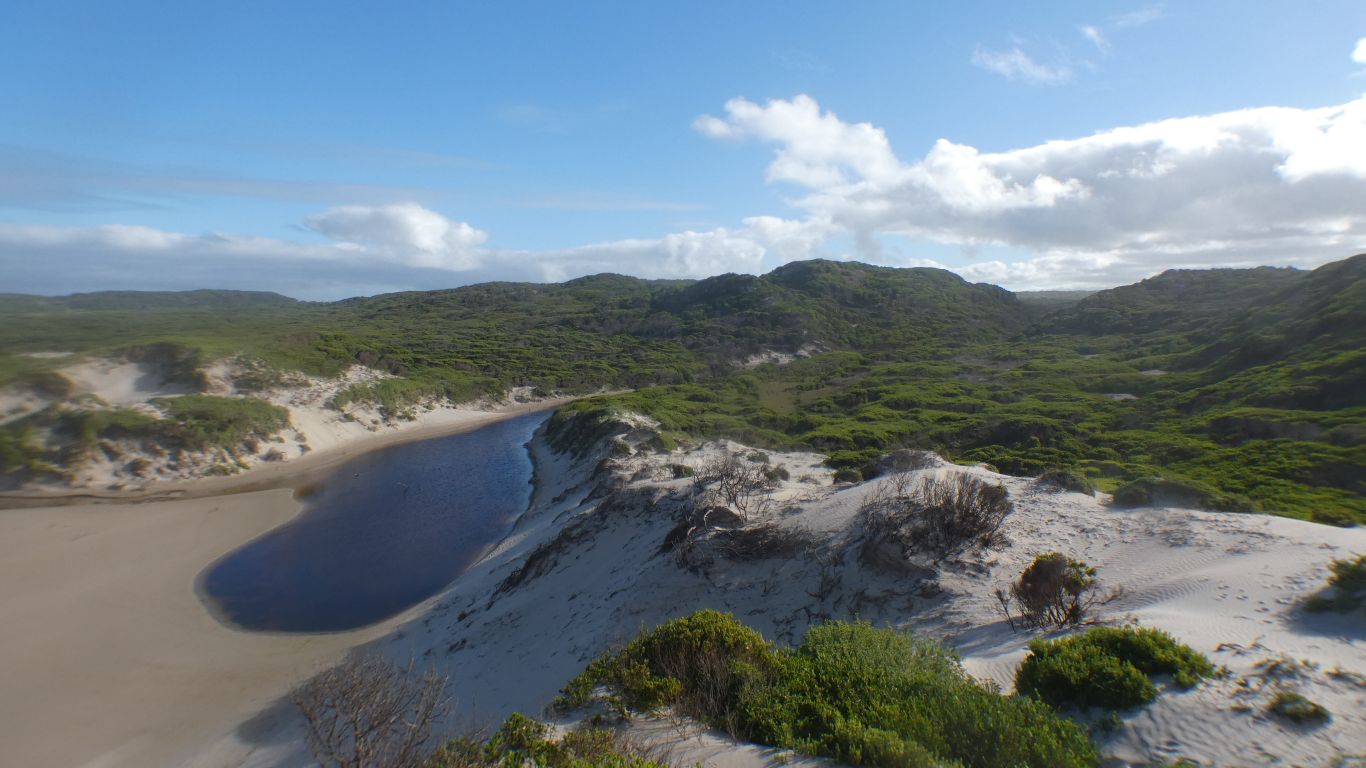
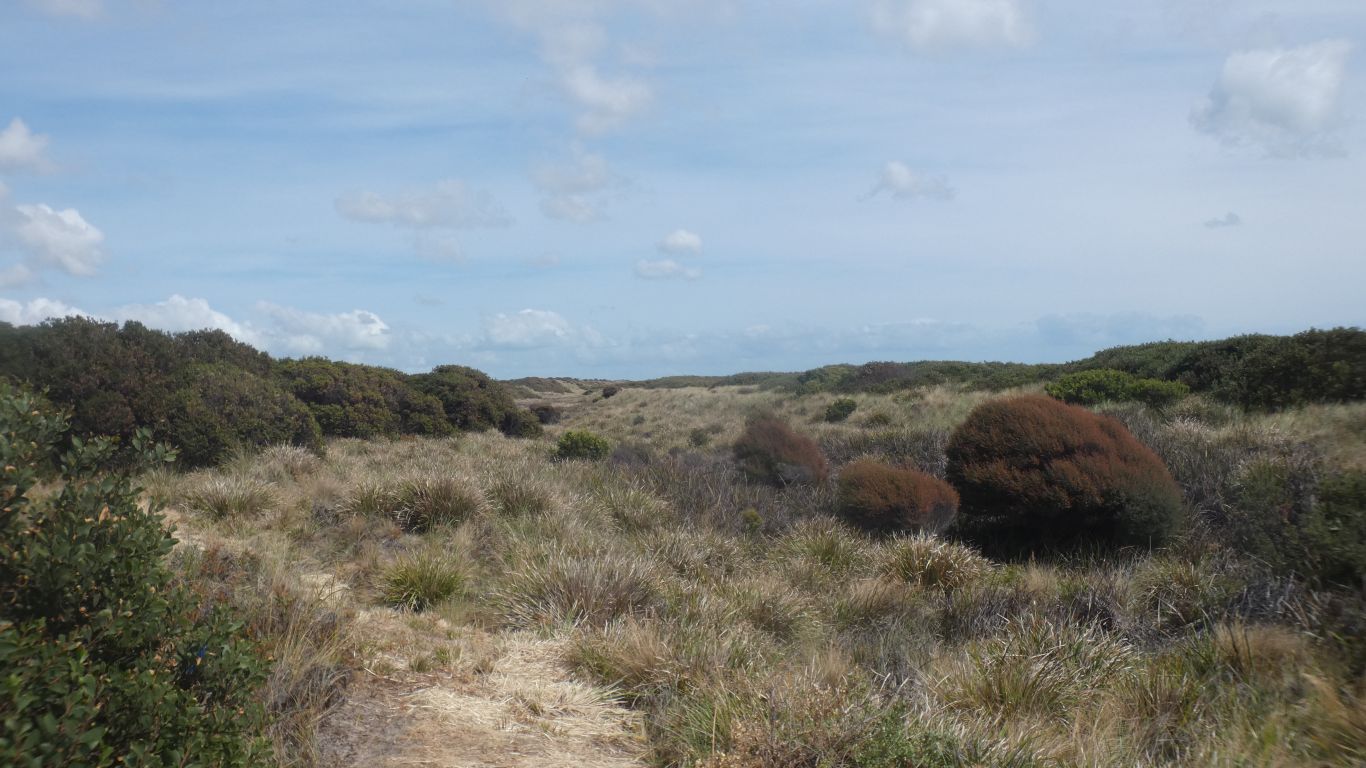
  Doctors Creek we believe.
     
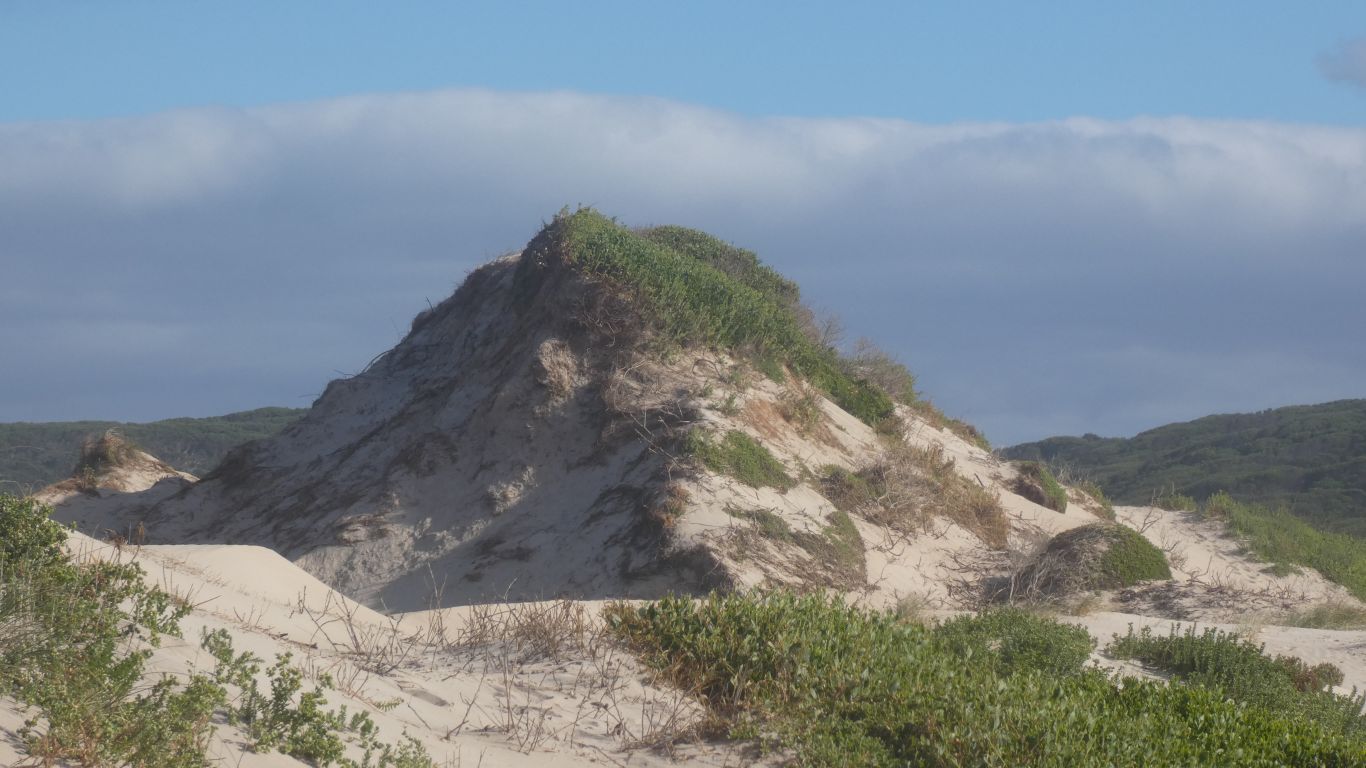
  We are looking for where the wind has eroded a midden, exposing shells and bones. The shells are harder and heavier than sand so more difficult to erode. We examine many faces like this. To no avail.

The site was excavated in 1966. We are struggling to reconcile site descriptions to where we are searching.
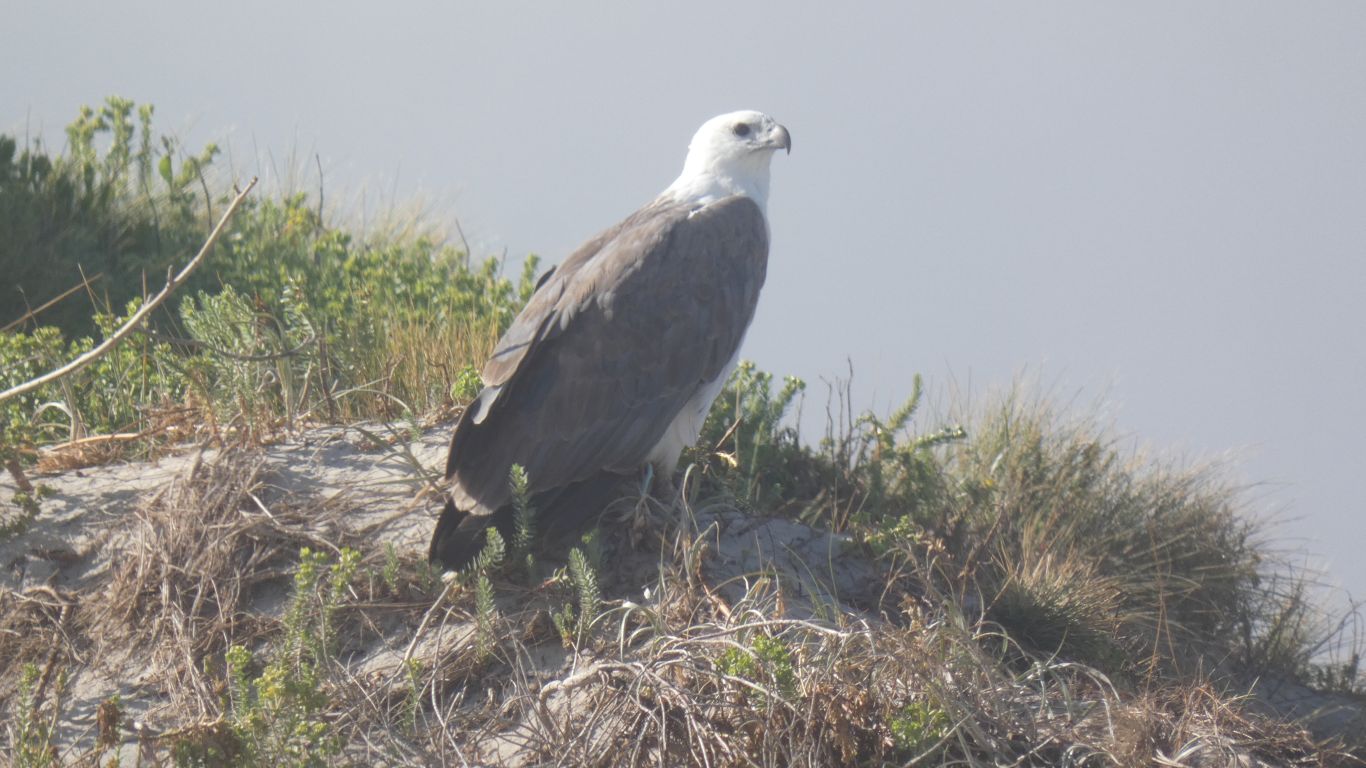
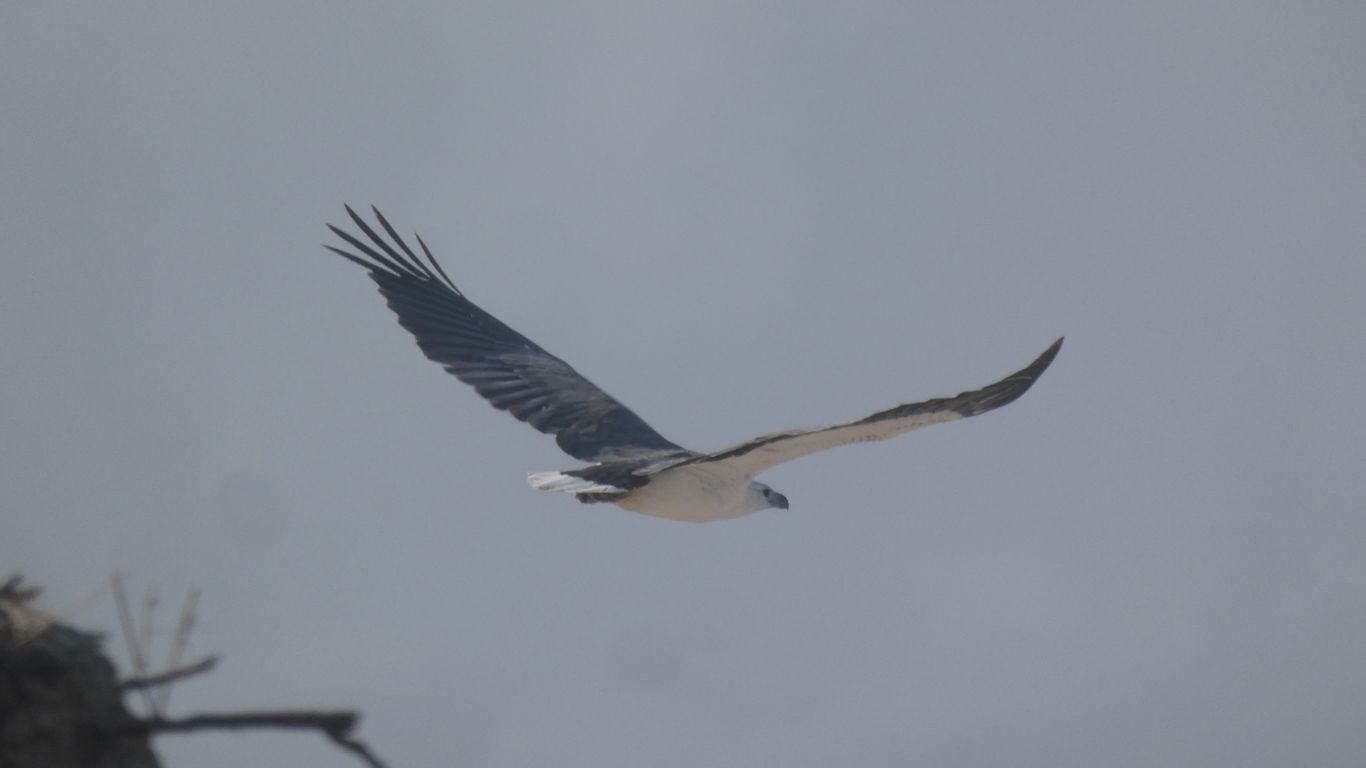
     
  Another diversion. Another white bellied sea eagle.
     
  That eventually became bored watching us so flew away.
     
  Perhaps further inland than we are looking.

But we've run out of steam.

Sadly, time to surrender our amateur archeologists membership cards.
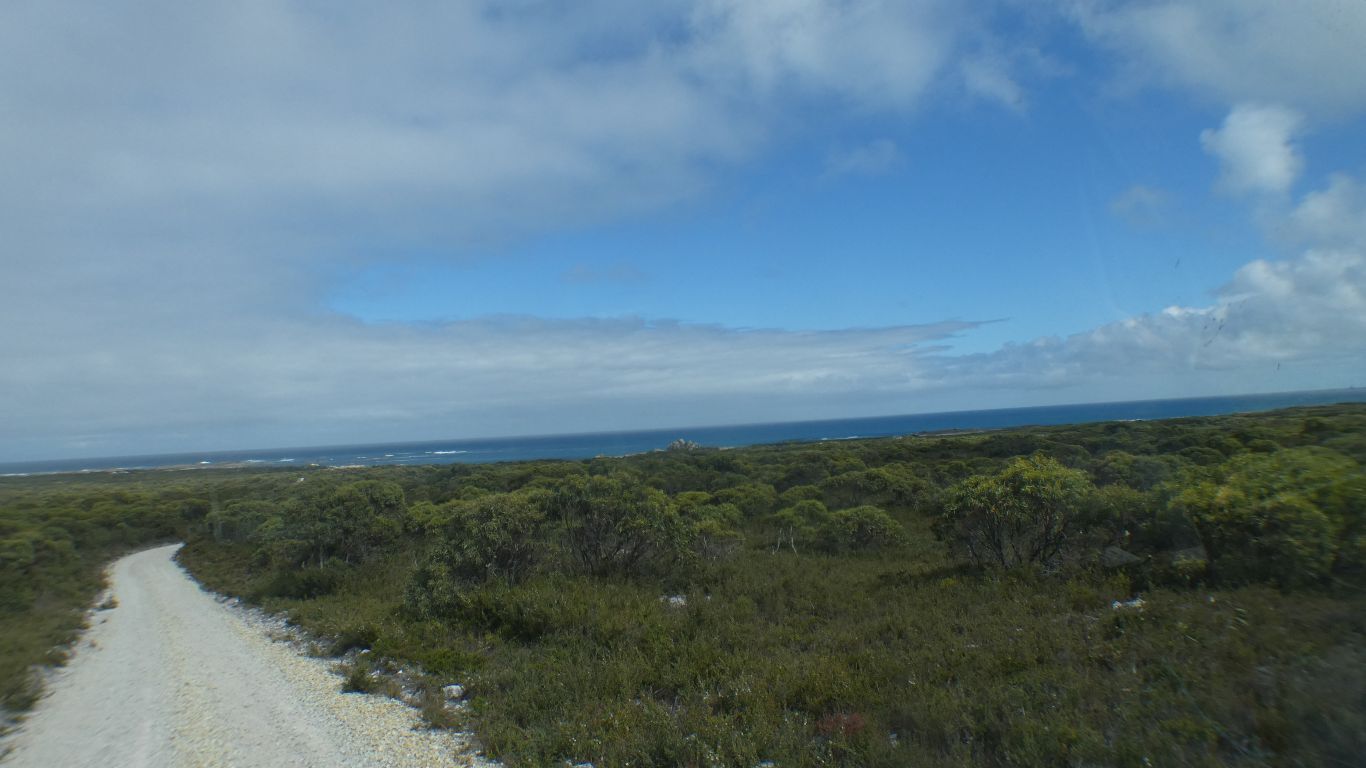
     
  We have a brief look to the north of West Point. But not inviting.
     
  So back to Mt Cameron West.

To the north of it is Preminghana. An aboriginal reserve.
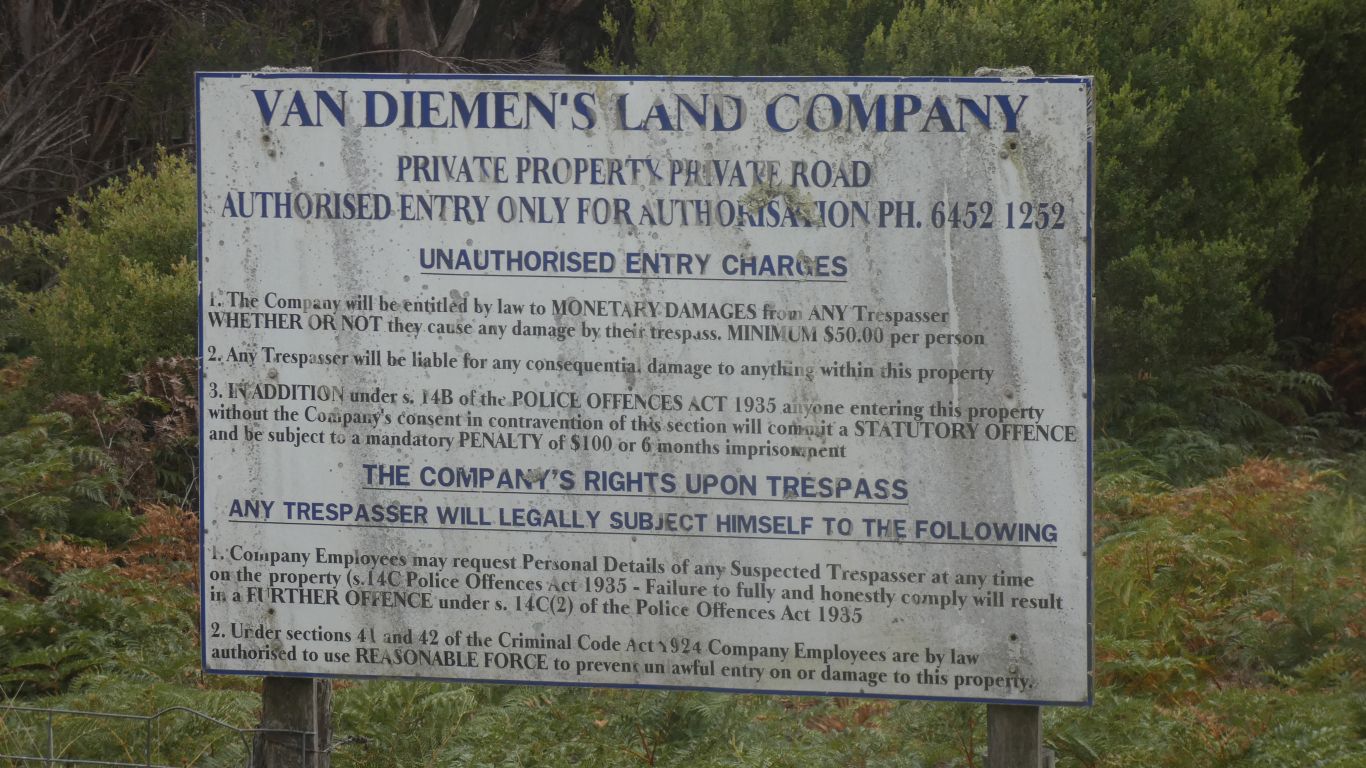
     
  Van Diemen's Land Company is no more.

It existed until a few years ago, recent enough to have $ on the sign.

And enough of history to have an ostentatious sign from the arc.

The area that is Woolnorth is now in the hands of a Chinese company, a change of name to Van.
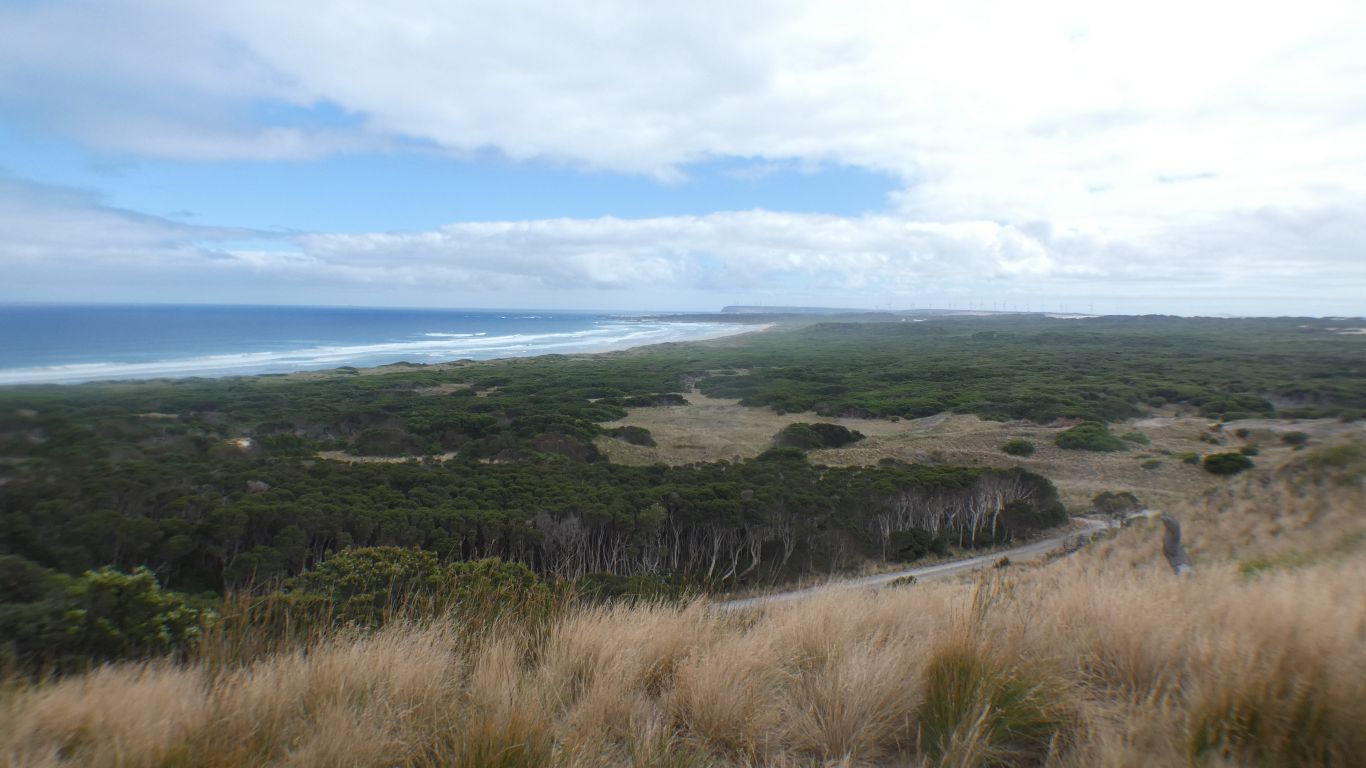
     
  There are middens in Preminghana. And at the north end of the beach some petroglyphs.

We walked as far as the beach, and greeted two people returning.

"How far did you walk?" we asked. "Just to the beach".

"We were hoping to walk as far as the petroglyphs" we said. And after a bit of thought one asked "what's a petroglyph?".

They were surfers, looking for surf.

The petroglyphs are reputedly covered with sand for protection, from weather and people. We are still tired from futile exertions at West Point. We beat a retreat.
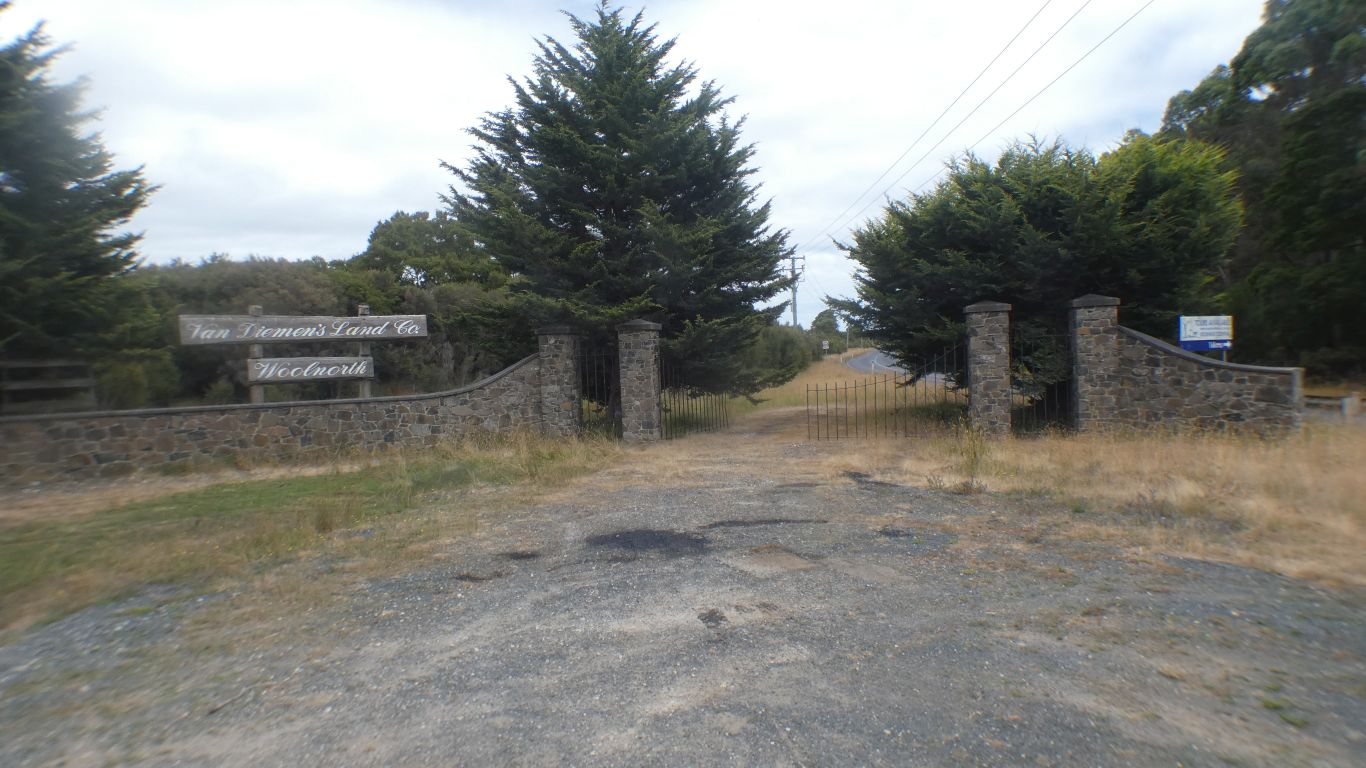
     
  How to make a statement?

Woolnorth Road now passes to the right. As if passing a moment in time.
     
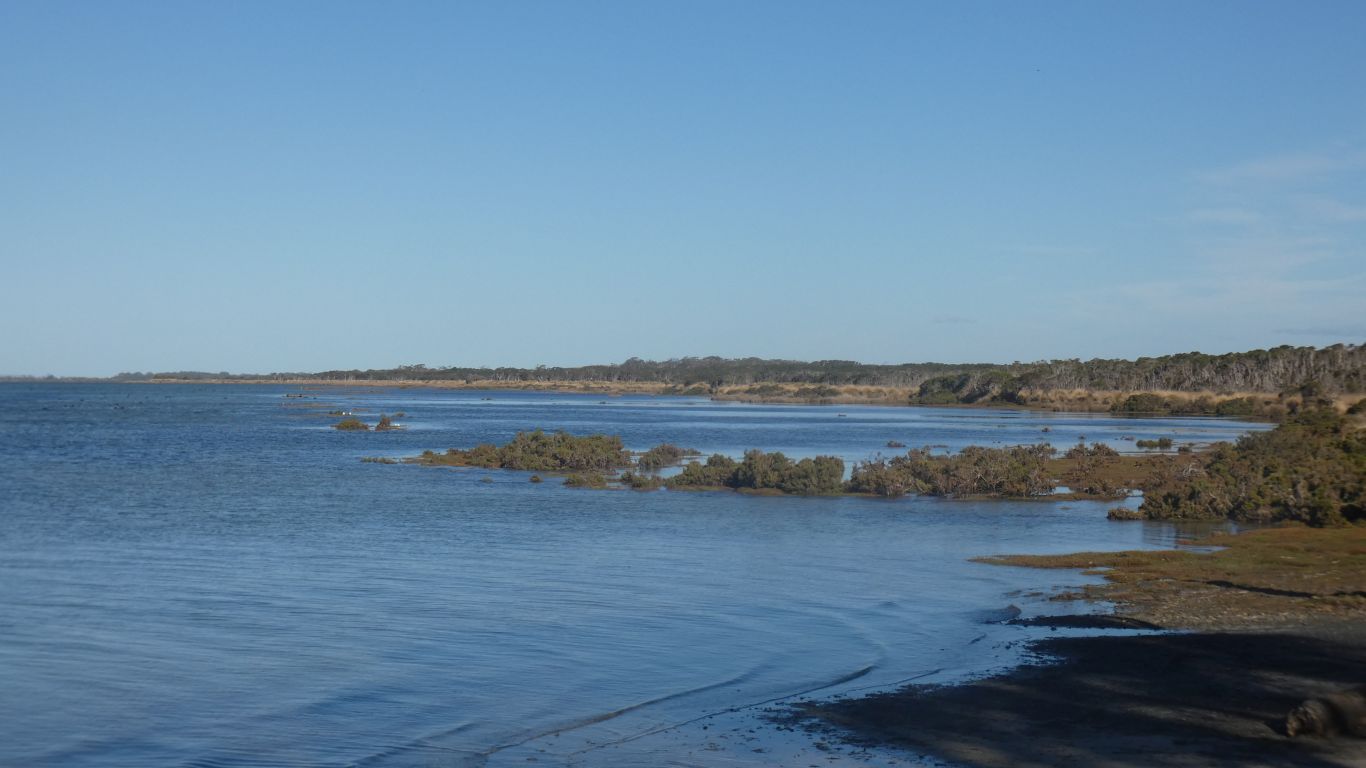
  We head more or less north, to the coast. A boat ramp, and 4wd track across the sand at low tide to Robbins Island.

We stop at the boat ramp.

One landcruiser passes us, headed to the island. The driver has made the trip previously.

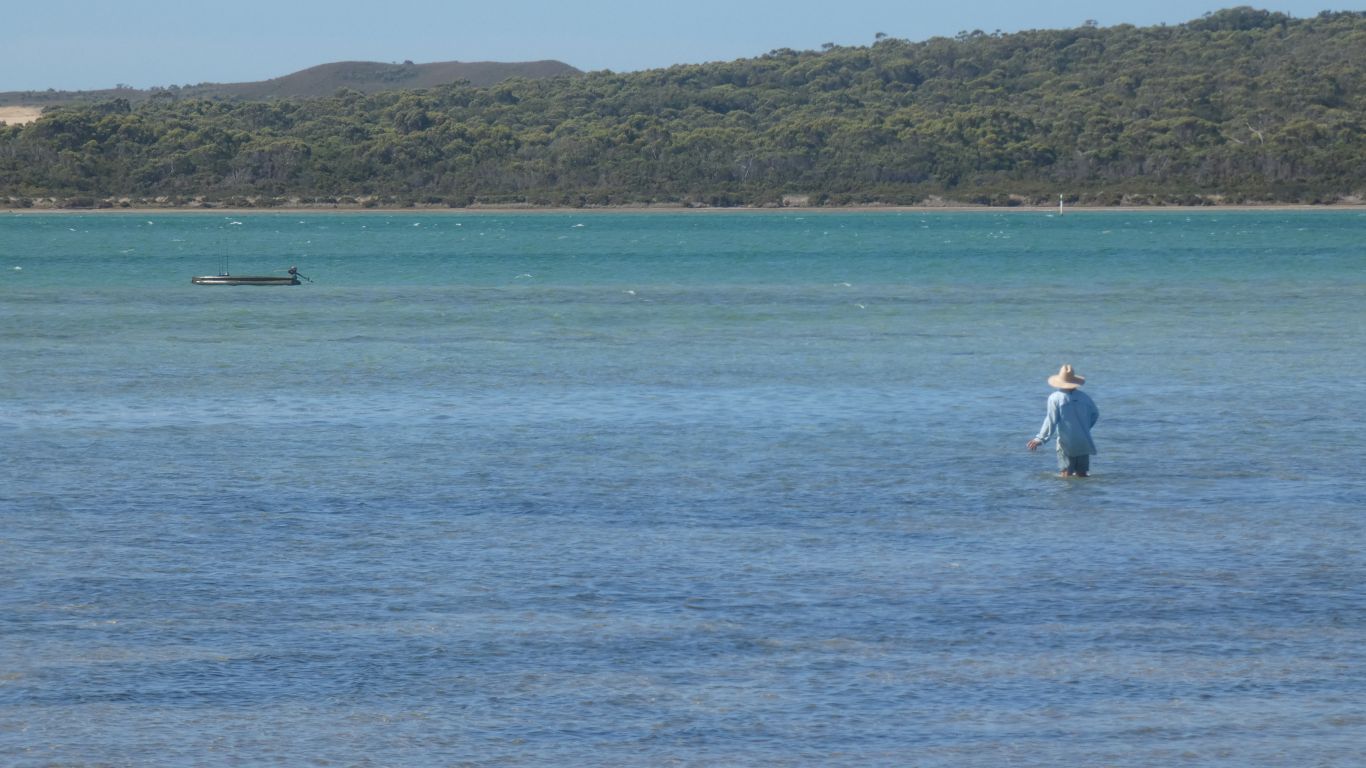
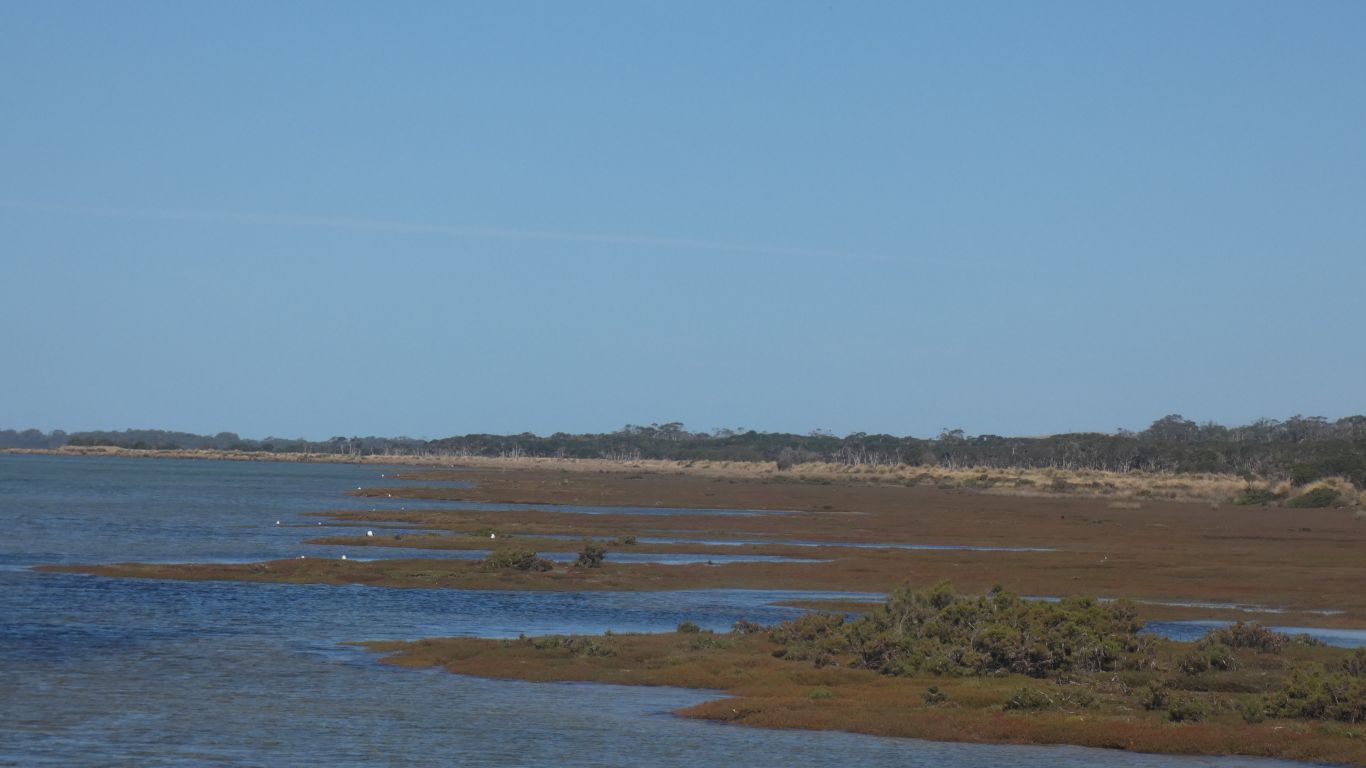
There are sand flats as far as we can see. A small channel near the island.

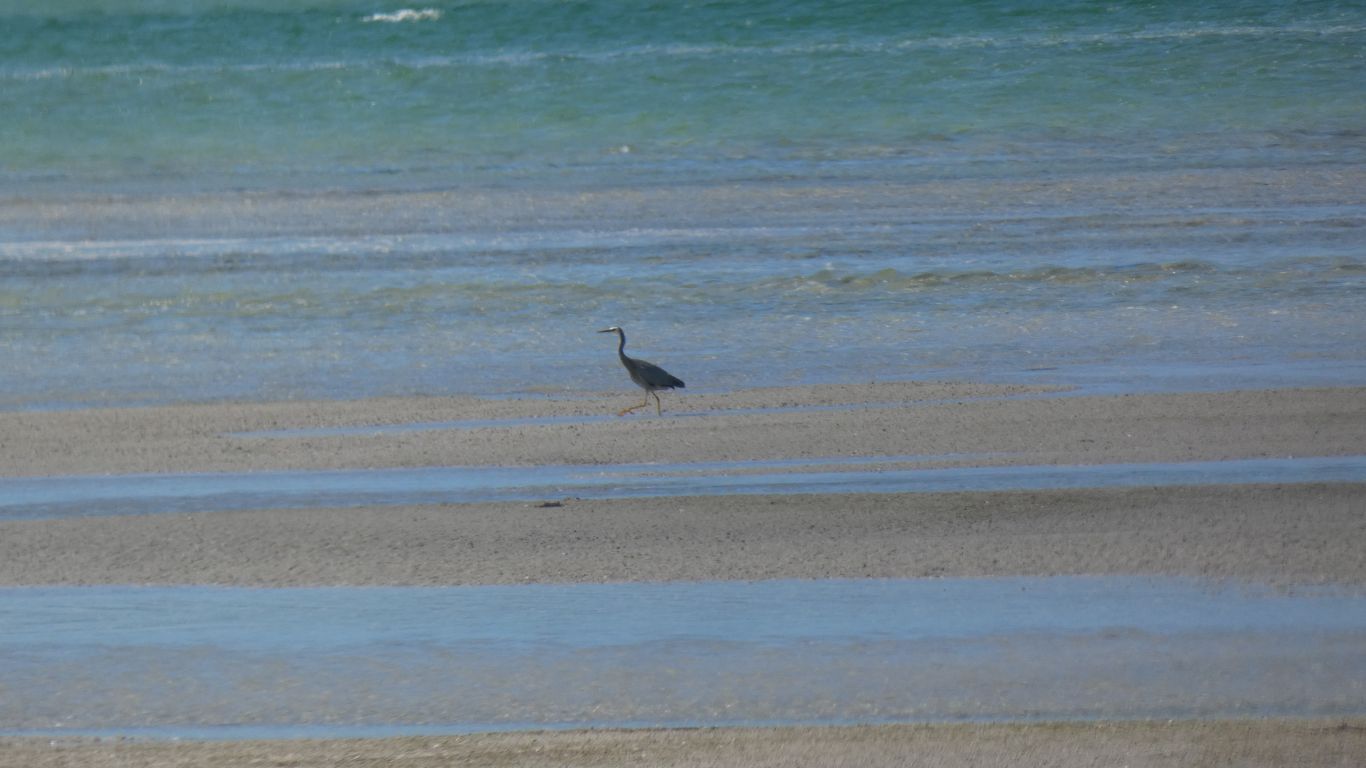
A solitary white faced heron.
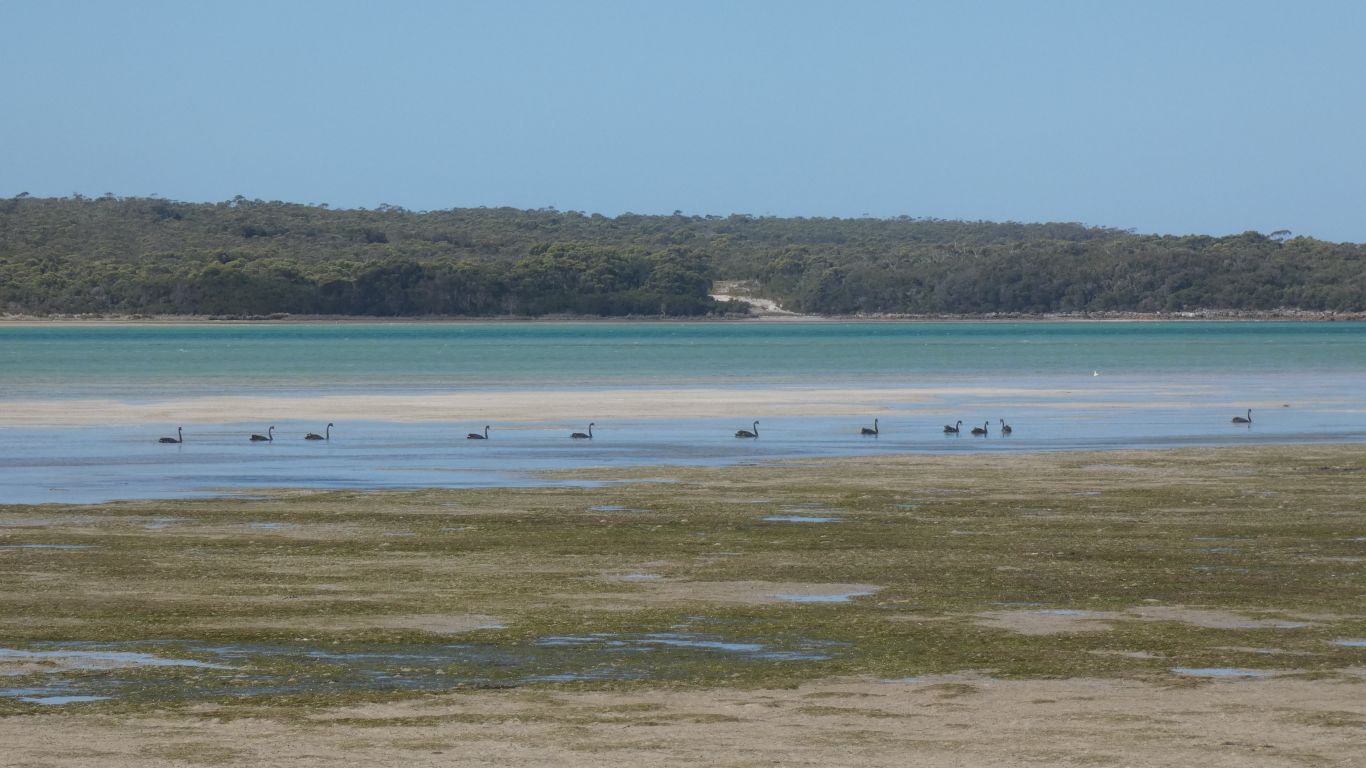
     
  A convoy of swans, that seems to make an endless anticlockwise circuit between us and the island.
     
  A little entertainment as we figure out what is happening.

Earlier we saw a young lady walking towards us across the flats.

Once the tide came in a gentleman appeared and walked towards the boat we had noticed moored at the edge of the channel.

He brought the boat to land, unpacked it, and stored it above the high tide mark.
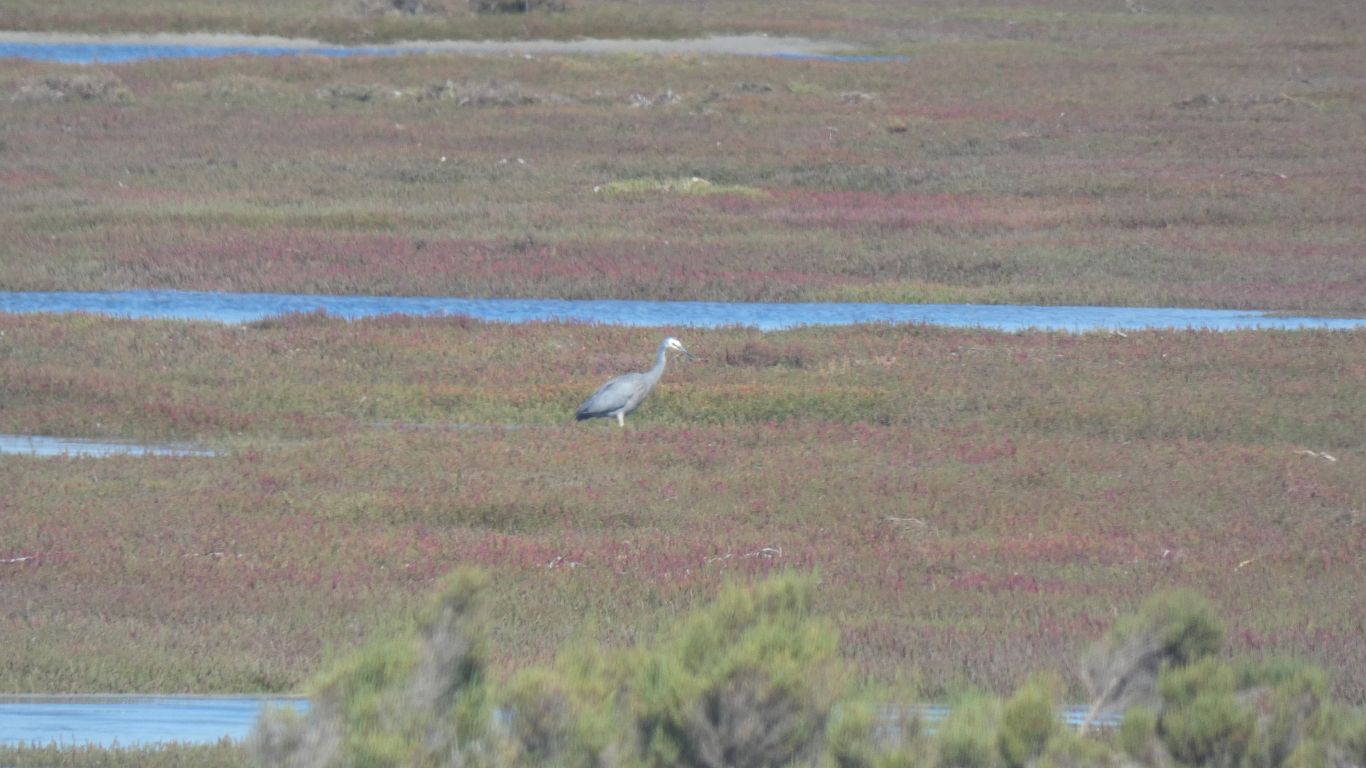
     
  The heron followed the tide.
     
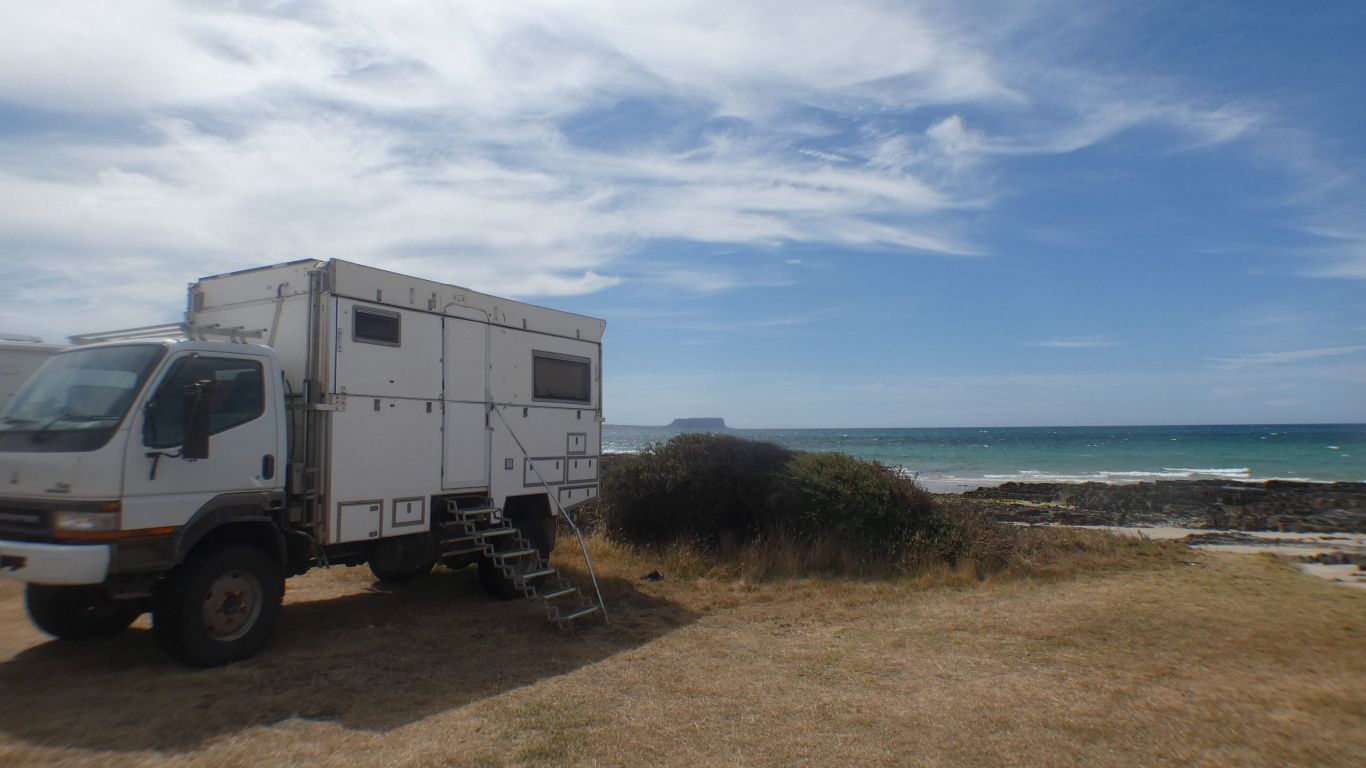
  We think we are camped about 50mm above high tide.
     
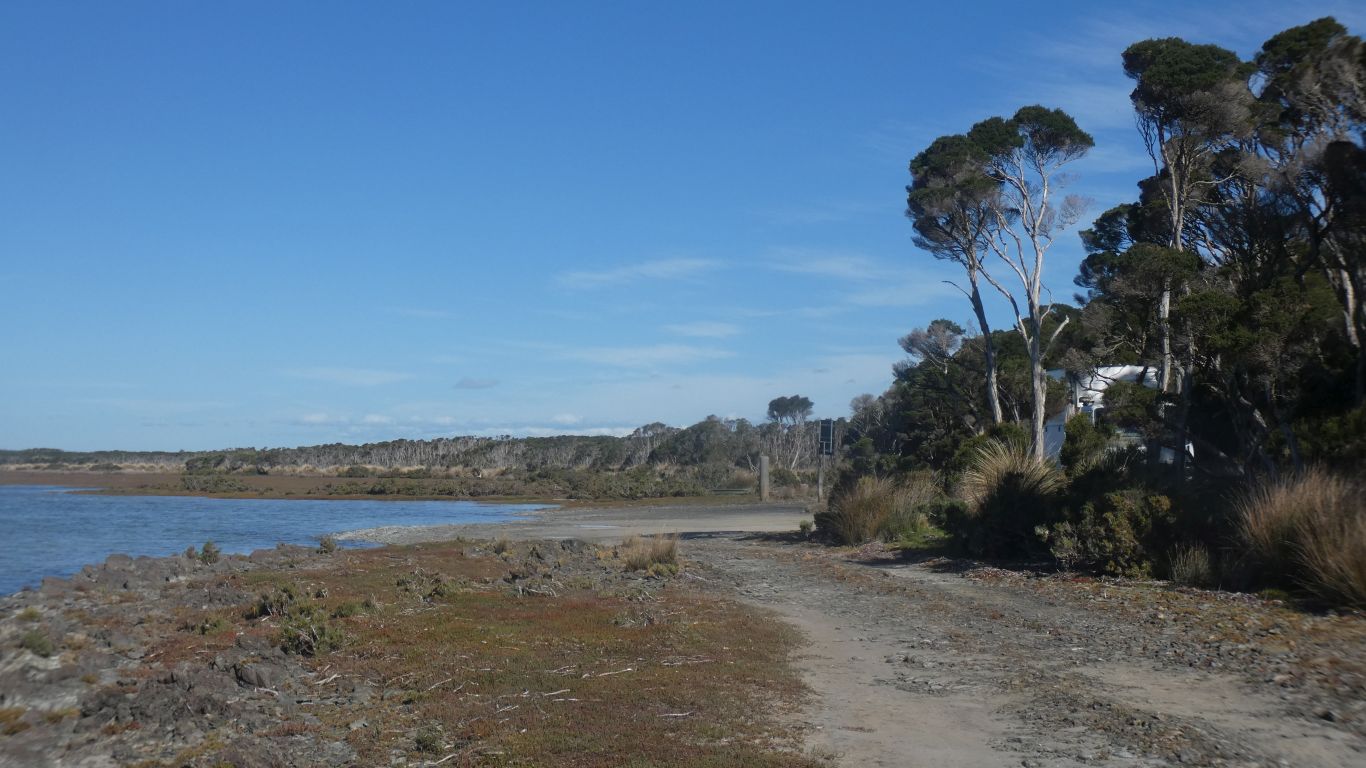
  A little bit of hard ground between us and the sea. We like the view.
     
  Inexorably the tide continued its inward rush.

It stopped short of us and reversed. As it its wont.

At dawn the following morning (no pics) the wind had changed, to northerly, which brought the high tide closer to us.

But still dry. Just.
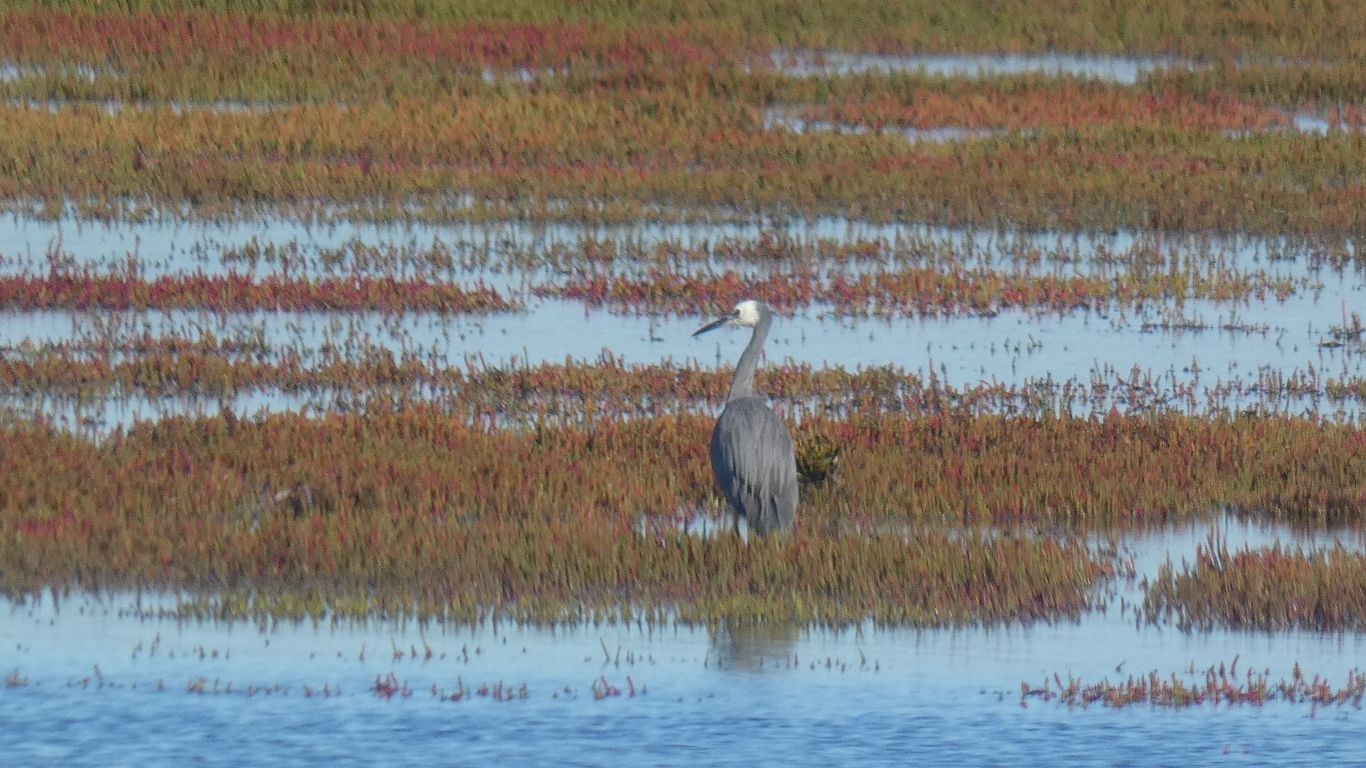
     
  The heron reverses coarse, and follows the tide out.
     
  Next day we stop at Smithton. The day started with rain and heavy cloud.

The forecast dire. No solar all day. So we plan a pizza at Tall Timbers.

We fill with water, empty loo, a big supermarket shop, and retire to camp.

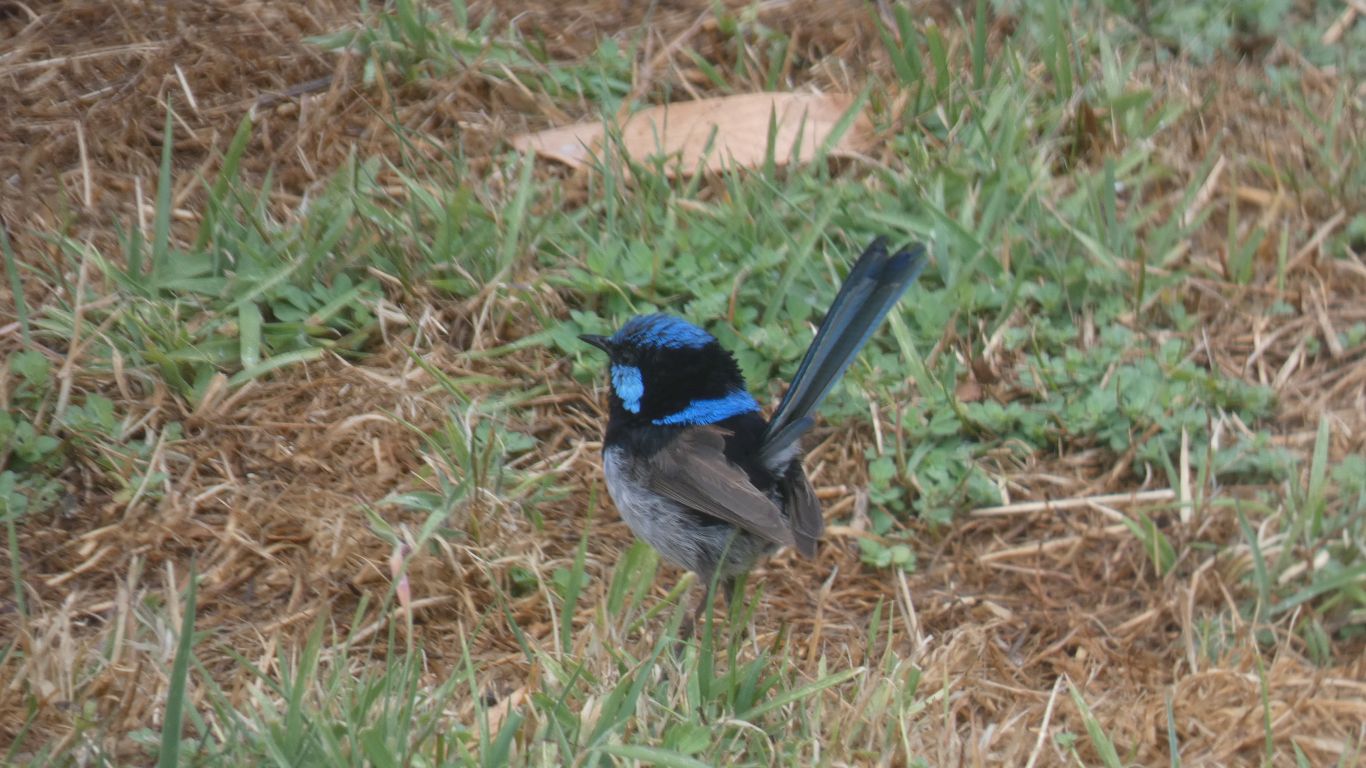
We are lucky. The rain passes. The batteries fill. The wrens entertain.

The pizza is good.
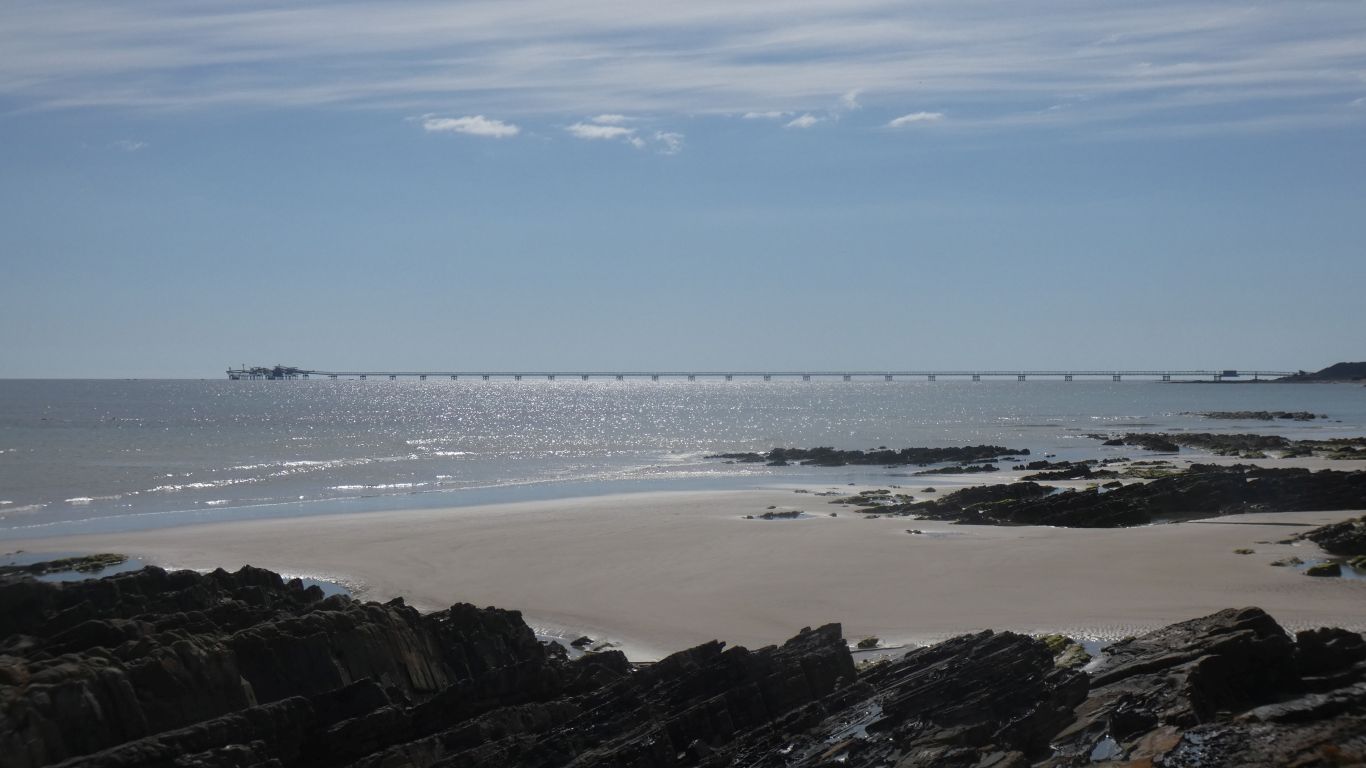
     
  Next day we are headed south, but on a whim stop at Peggs Beach.

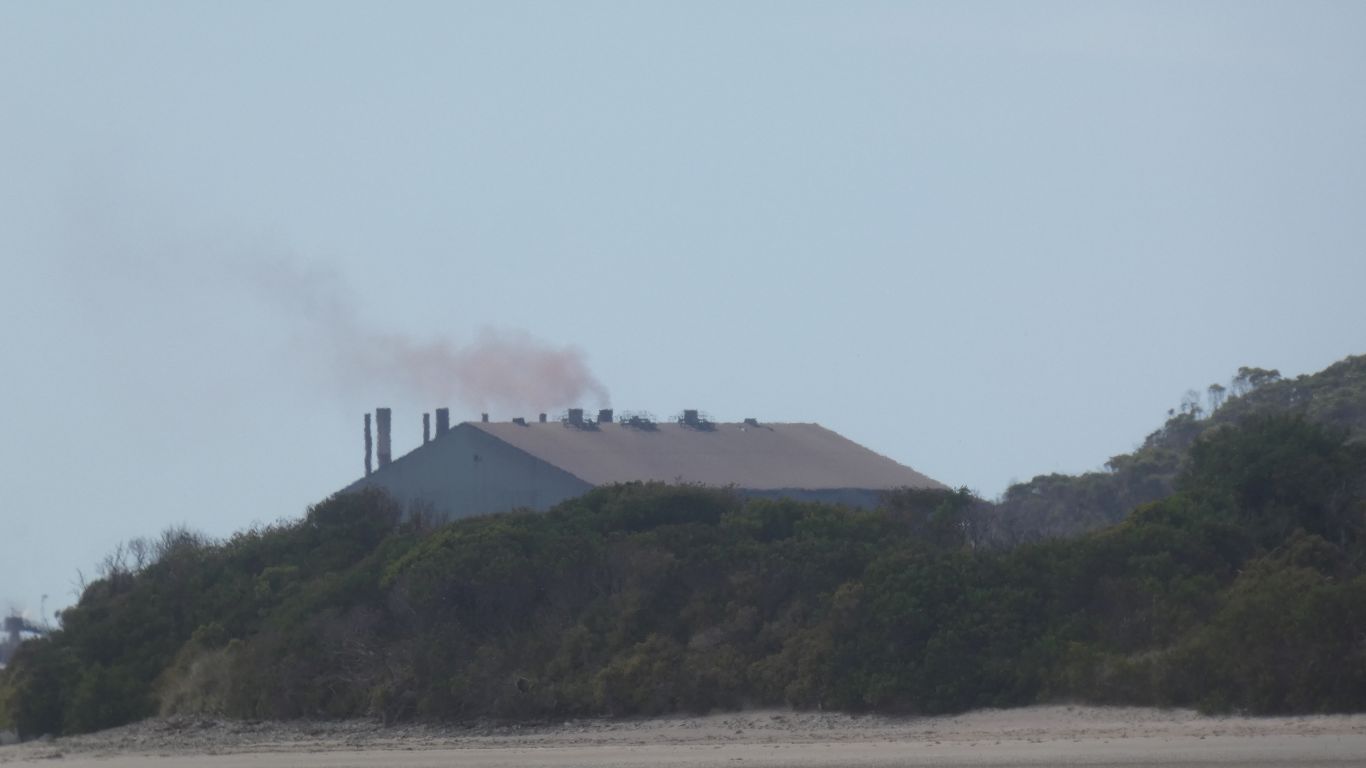
Just to the east of us is the end of the 85km slurry pipeline from Savage River Mine (Magnetite).
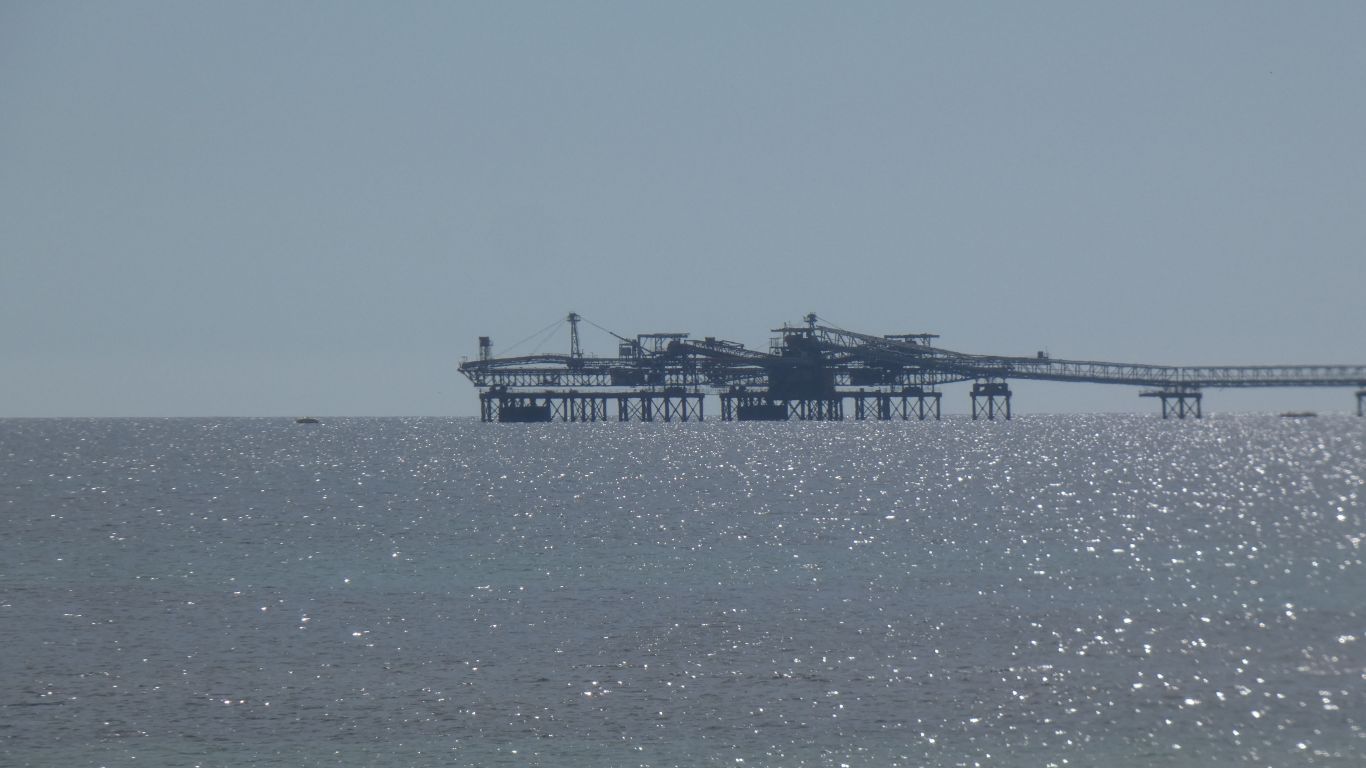
     
  A drying plant and wharf for ship loading from conveyors.
     
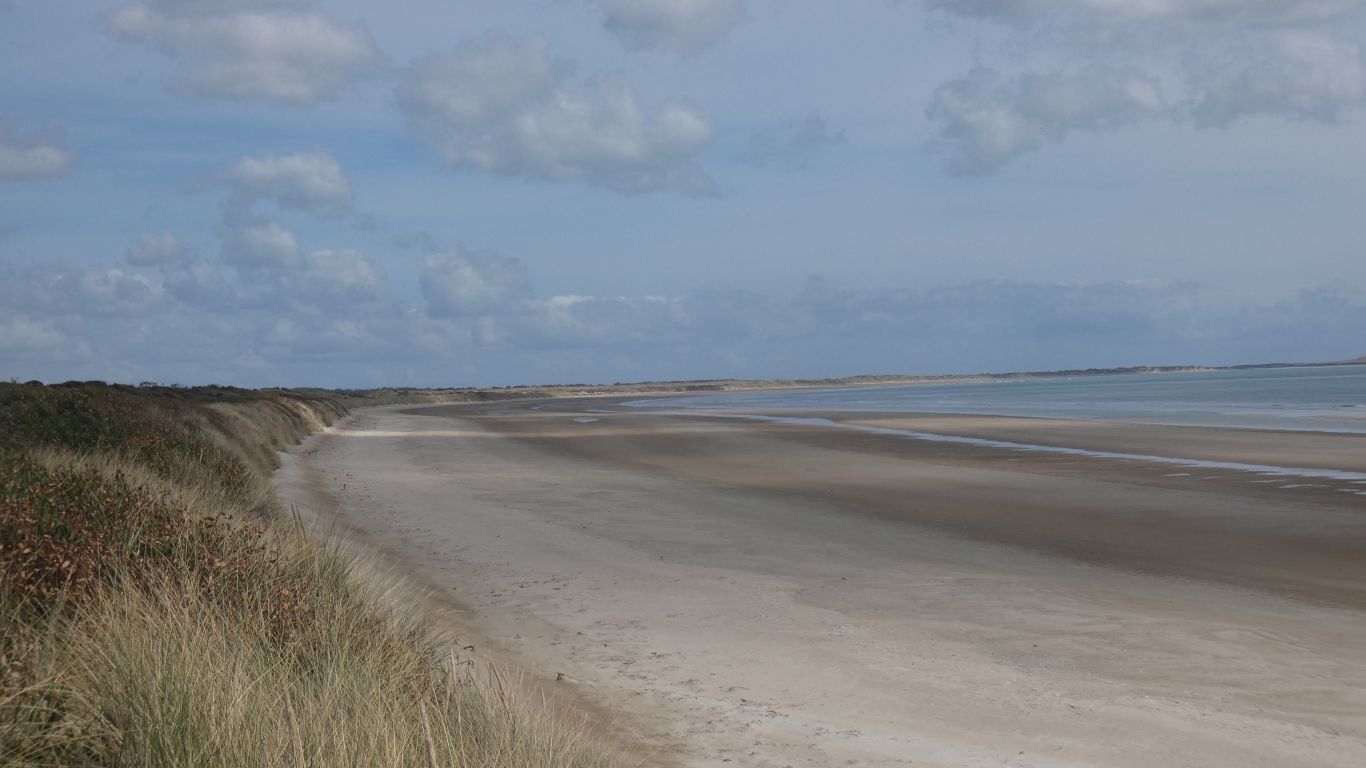
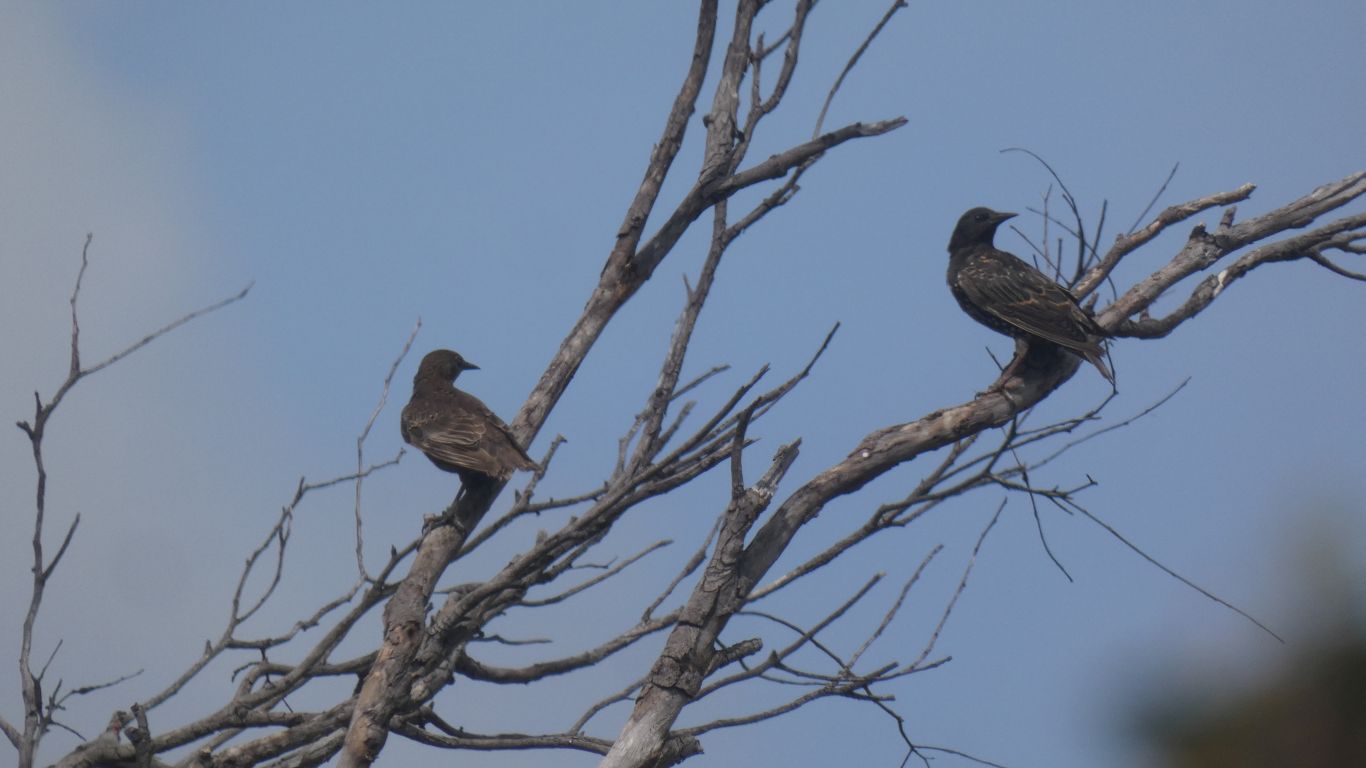
  A walk along the beach west. And a large flock of starlings.
     
  Plus another goldfinch. There are several, but elusive.
     
  A cut track behind the dune.
     
  Which heads inland, so we return to the beach.

If we walk far enough, and cross Black Creek, we would reach Stanley.
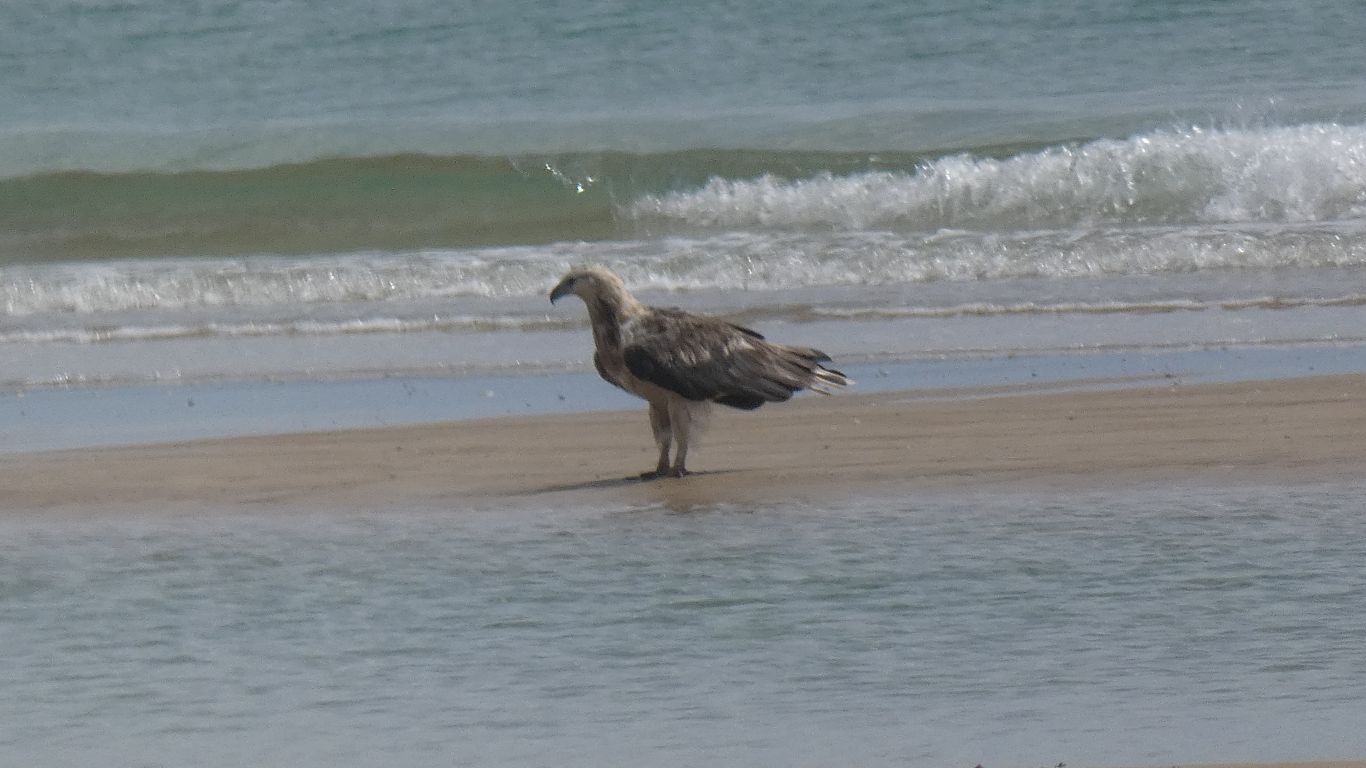
     
  The juvenile white bellied sea eagle, we think, can fly, which must make getting around so much easier.
     
  Back to camp. Whatever they are burning to dry the ore needs adjusting.
     
  Room with a view. The Nut in the distance.
     
     
Gateway
CommentsHome


Feel free to make a (useful!) comment.
Please enter this number so we know you are a real person   

and your name      and email address     
your email address will not be displayed. Nor will your ip address which is 216.73.216.91  
and enter your comment .....